By Mike Sain't Louis ·
The tipsy glow and the hunk: diminutives and augmentatives in my lyrics
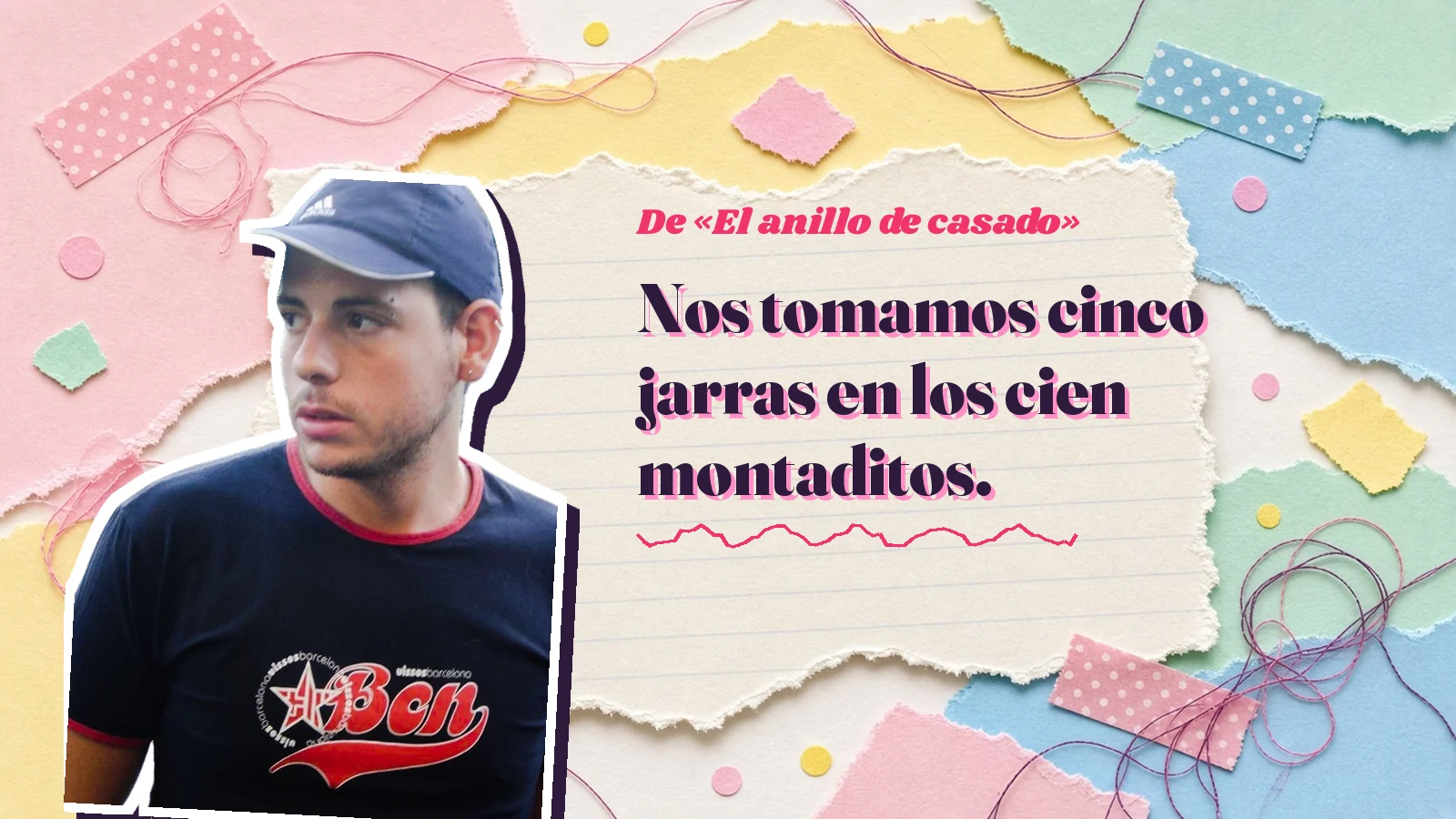
«Nos tomamos cinco jarras en los cien montaditos.»
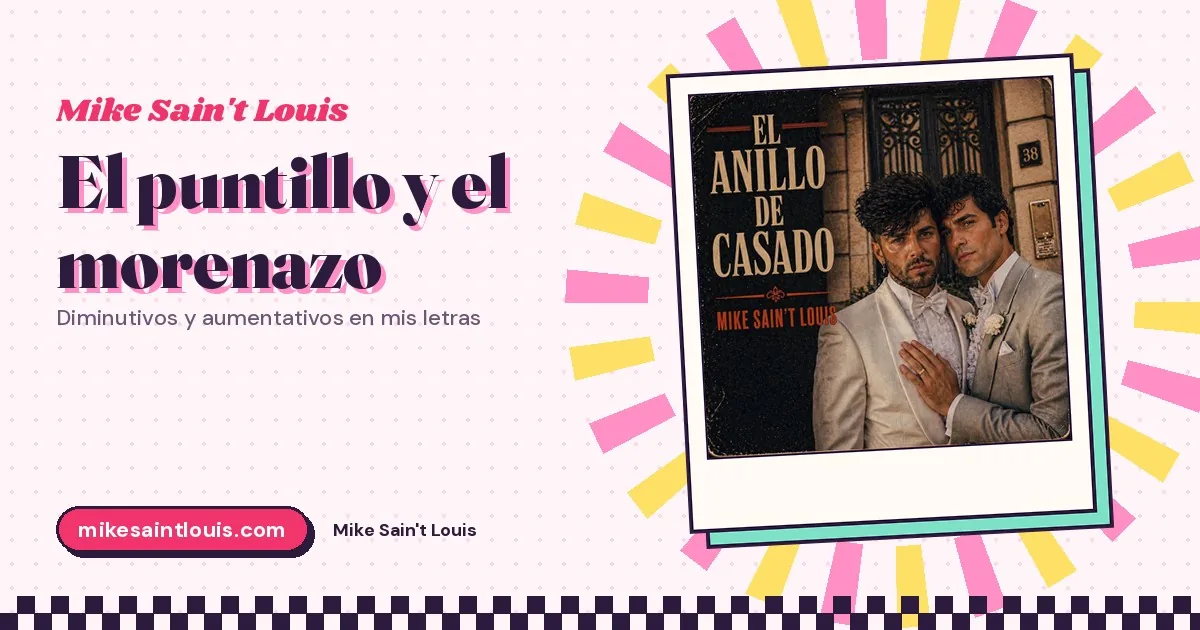
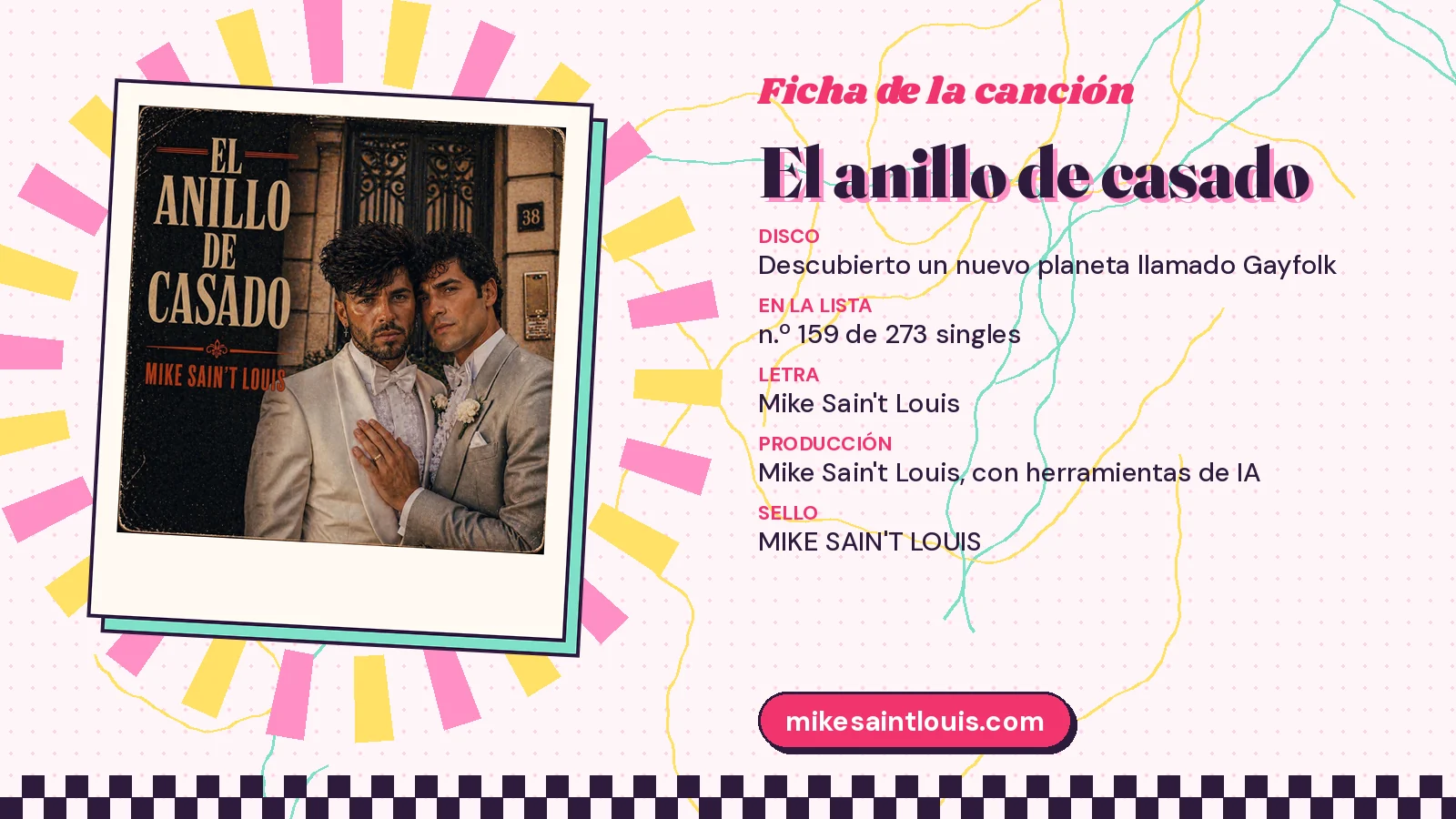
That's how «El anillo de casado» opens, one of the songs on the first album of the GAYFOLK trilogy. (The full lyric is on gayfolkplanet.com.) Two men in a beer hall, five pints, a love that has to stay out of sight. And in the song's first four lines there are three diminutives in a row: montaditos, escondiditos, contentillo. Plus a fourth that isn't quite one but sounds just like it: el puntillo.
When I reread that verse I realise the story is told as much by the suffixes as by the words. Strip out the diminutives and you're left with a report: two people drank beer in a bar and kept a low profile. Leave them in and you're left with an afternoon. Its warmth, its complicity, that soft dizziness of the third pint.
This piece is about exactly that: the diminutives and augmentatives that turn up in my songs. How one syllable tacked onto the end of a word can turn an insult into a caress, a caress into a jibe, or an ordinary man into a morenazo, a dark-haired hunk. It's one of the things I love most about Spanish and, I think, one of the most folk. Because nobody learns suffixes at school. You learn them in the kitchen, in the village square and leaning on a bar.
What fits in a syllable
Grammarians call diminutives, augmentatives and pejoratives «appreciative suffixes». The name gives it away: they aren't really there to measure, they're there to judge. A «cafelito» isn't a smaller coffee. It's a coffee you're in the mood for, a coffee with someone, a coffee you're going to take your time over.
The linguist Amado Alonso explained this in 1935 in an essay with a beautiful title, «Noción, emoción, acción y fantasía en los diminutivos»: notion, emotion, action and fantasy in diminutives. His idea, boiled right down, was that in Spanish the diminutive hardly ever talks about size. It talks about the feeling of whoever's speaking. When a mother says «cómete el platito», eat up your little plate, the plate hasn't shrunk. What's changed is the tone: there's tenderness, there's pleading, maybe a little pressure.
I find it one of the most useful observations I know for writing songs. Because a lyric is, above all, tone. The words of a heartbreak song are nearly always the same: I love you, you left, don't come back, it hurts. What changes from one song to the next is how they're said. And in Spanish, a cheap and precise way of changing the tone is to tinker with the end of a word.
Some languages don't have this tool, or only have a sliver of it. In English, for instance, to say something like «morenito» you have to add words, reach for another term or trust to intonation. In Spanish two letters will do. That's why, when Spanish songs are translated into other languages, the first thing to go is almost always this: the affection or the venom that was hiding in a suffix.
Montaditos, escondiditos, contentillo
Back to the beer hall in «El anillo de casado», because that first verse is a little handbook.
Montaditos. Here the diminutive is already part of the name: montaditos are those small bread rolls with something on top, and the beer hall in the song is a well-known chain with the number one hundred in its name. It's what grammarians call a lexicalised diminutive, a word nobody hears as a diminutive anymore. But it still sounds cheap and cheerful, like cold beer and an afternoon with friends.
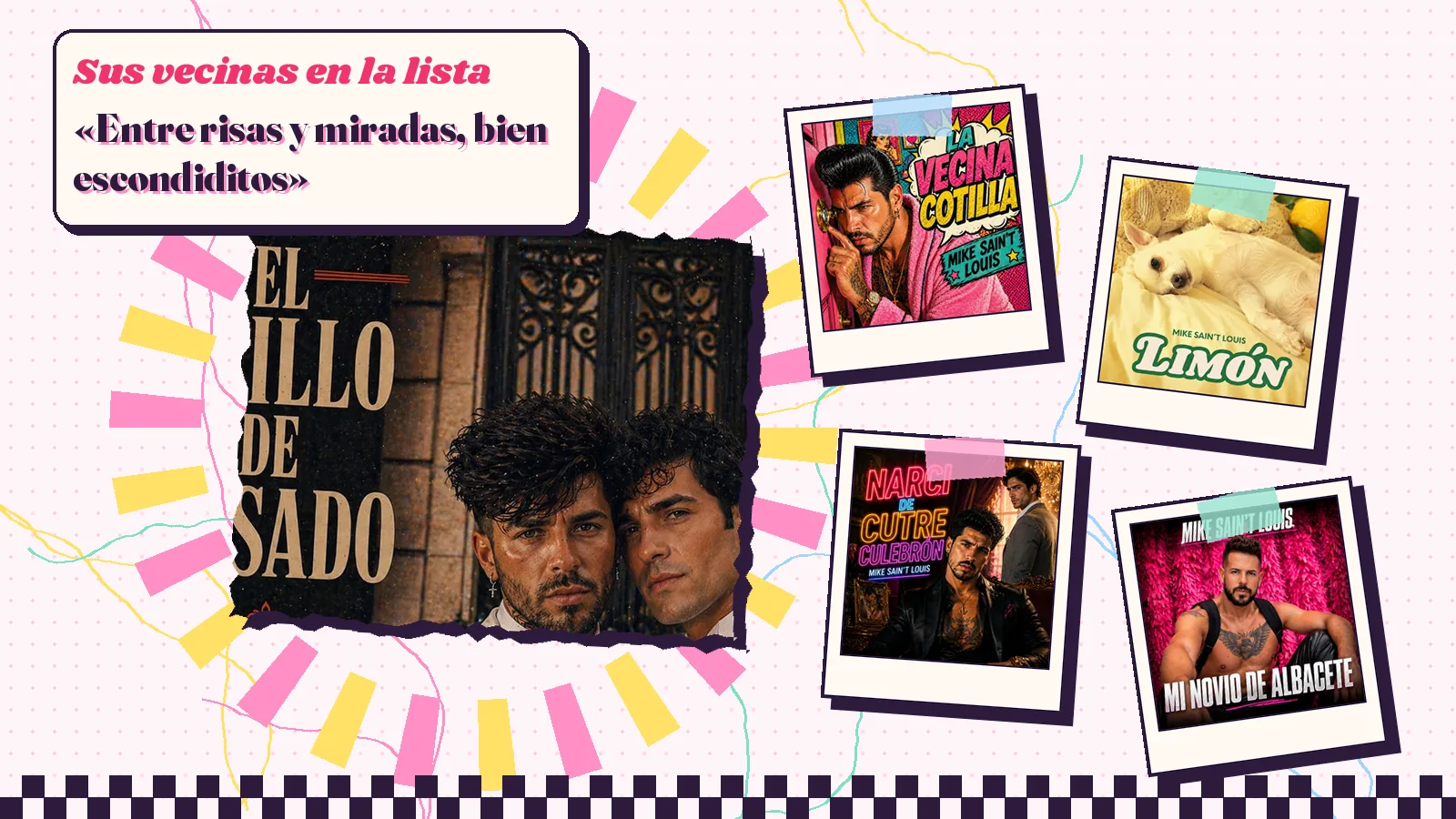
Escondiditos. «Entre risas y miradas, bien escondiditos», among laughter and glances, nicely tucked away, the lyric says. This one is a diminutive with intent. It could have said escondidos, hidden, and the line would mean the same. But escondiditos has play in it. It sounds like children at hide-and-seek, like mischief, almost like fun. And that's precisely what the song does with a subject that could be brutal: loving a married man, his closet, the discreet guesthouses. The diminutive lifts the weight off the secrecy. It doesn't deny it, but it turns it into a game for two.
Contentillo. «Hoy estoy contentillo, estoy con el puntillo», the verse goes on. Here the suffix is -illo, and that's not the same as -ito. Contentillo isn't quite contento, happy. It's half-happy, merry, courtesy of the pints. And el puntillo confirms the suspicion: to be «con el puntillo» is to be a bit tipsy, at that exact point where everything seems like a good idea.
What's interesting is that the song uses the diminutive to talk about an in-between state. Neither sober nor drunk. Neither fully hidden nor in plain sight. Neither single nor a couple. The whole song lives inside an «-illo»: in a small, warm, slightly dangerous zone. If the character were simply happy, it would be a different song. Contentillo is the word of someone who knows he's playing with fire and, for now, couldn't care less.
A map of Spain in suffixes
One of the loveliest things about the Spanish diminutive is that it has an accent. Every region of Spain has its favourite suffix, and hearing it is enough to tell you roughly where someone comes from.

-ito is the most general, used everywhere. -illo is very Andalusian, though you hear it all over Spain. -ico belongs to Aragon, Navarre, Murcia and eastern Andalusia, and to several Latin American countries too: Costa Ricans are called «ticos» precisely because of their habit of saying «chiquitico». -ín is Asturian and Leonese. -iño is Galician. -uco sounds like Cantabria. And -ete is heard a great deal in Catalonia, Valencia and Aragon.
Several of those accents turn up in my lyrics, and I like to think that's folk too: the mix of ways of talking you hear in any big city, where people from everywhere live side by side.
In «La vecina cotilla», for example, there's a «momentico». The narrator watches the neighbour across the street through the window, and when the neighbour puts on his pyjamas, he savours the momentico. Not momentito. Momentico, with that ending which in Madrid sounds like somewhere else, like Murcia, Zaragoza or Colombia. And in the same song there are some short little shorts, «cortitos», a slow dance, «despacito», and a «chiquilla», a young girl. Three different suffixes in a single song: -ico, -ito, -illa. It's practically a sample book.
In «Limón», on the other hand, there's a «chiquitín». The -ín that's so ordinary in Asturias sounds, in a love song, like a pet name, a word from home. And chiquitín comes back in other lyrics, always with that tone: the person who melts you even though they shouldn't.
Moreno, morenito, morenón
If I had to choose a single line to explain how suffixes work in Spanish, I'd choose one from «Narci de cutre culebrón»: moreno morenito morenón.
Three words. The same root. Three sizes.
Moreno is the neutral description: a man with dark hair or sun-browned skin. Morenito is the word you use for someone you fancy, the one said with half a smile. Morenón is the man who dazzles you, the one who fills the whole room when he walks into a bar.
In the song, that staircase of suffixes paints a narcissist with an undercover profile. And it works because every step says something different. First you see him. Then you like him. Then he has you spellbound. And in the very next line the whole thing is blown wide open. The gradation of suffixes is exactly the gradation of falling for someone. And the culebrón, which is also an augmentative, is what's left at the end: a long, tacky soap opera full of twists.
I love how such a short list can tell an entire story. Nothing needs explaining. The ear gets the staircase because we've all climbed it at some point.
The hunk, the great hair and the drag
The suffix -azo has two faces. On one side it's an augmentative of admiration: a cochazo, a dream car; a tipazo, a knockout figure; a pelazo, a glorious head of hair. On the other it's the suffix of blows: puñetazo, a punch; portazo, a slammed door; codazo, an elbow in the ribs; flechazo, love at first sight, literally an arrow-strike. And in my lyrics both faces appear, sometimes in the same song.
In «Mi novio de Albacete» there's a line that tickles me because of the way it sets two -azos against each other: tú pelazo negro, yo encantado, you with your gorgeous black hair, me delighted. And later the punchline: yo tan bueno, ¡y tú un coñazo!, me so good, and you such a drag! Pelazo is pure admiration. Coñazo is unbearable boredom. Same suffix, opposite meaning. The song goes from flechazo to fed-up in a handful of lines, and the suffixes do the heavy lifting.
Morenazo, meanwhile, turns up in one song as a form of address, almost a proper name: querido morenazo, dear hunk. It's a way of speaking to someone that mixes the compliment with irony. Because when you call someone morenazo in a farewell letter, you're no longer quite flattering him. You're reminding him of what he was and what he's stopped being to you.
And in another song, the last ex, who turns out to be an artificial intelligence in disguise, is remembered for his polvazos, his epic shags. Here the augmentative is bar-stool exaggeration, the way you show off to your friends about what you had. It's an after-dinner -azo. It isn't meant to be accurate. It's meant to be funny.
The softie and the sucker
There are two suffixed words that, in my lyrics, describe the same thing from two angles: buenazo and pardillo.
Buenazo turns up, for instance, in «¡Eso es lefa!», in a list of characters that includes el buenazo de mi última pareja, my last partner, the big softie. And it turns up in «Un puñetazo al día», which talks about someone who is both a right one and a buenazo. The buenazo is a very Spanish figure: the man who is good to a fault, who never catches on, who forgives too much. Here the -azo doesn't magnify. It flags an excess. Being good is fine. Being a buenazo is something else, because it implies someone is taking advantage of you.
Pardillo is almost the same thing seen from outside. The pardillo is the innocent, the one who lets himself be fooled. In «Asqueroso coordinador» the lyric says: te pensaste que era un pardillo, you took me for a sucker. And in «No quiero otro novio cojín» the question is who the next pardillo will be. The word comes from a bird, the linnet, small and brownish, and on the street it has long meant someone who's slow to wise up. The -illo here isn't affectionate. It's condescending.
In the same cushion-boyfriend song there's another -illo with a sting in its tail: tu nueva obra de teatrillo, your latest little stage play. Not a theatre. A teatrillo. A small show, all cardboard sets and badly painted backdrops. The diminutive turns manipulation into an amateur performance. And for anyone who's been manipulated, that's a small victory: they stop seeing a drama and start seeing a school play.
This use of the diminutive as a weapon fascinates me. We tend to think the diminutive is always tender, and it isn't. A «qué listillo», what a smart alec, is no compliment. Nor is a «vaya numerito», what a little scene. In «La dieta del cucurrucho» the question is whether somebody's numerito is on its way, and a numerito is exactly that: an over-the-top spectacle staged to grab attention. The suffix shrinks something in order to mock it.
Chiquitín, monín and the grammar of flirting
If the diminutive can be a weapon, it is also, of course, the grammar of flirting.
In «Que te mola el cruising» two pet names arrive one after the other: vaya, vaya, chiquitín; vaya, vaya, monín. Well, well, little one; well, well, cutie. They're the words of someone who has just caught somebody else at something, with a blend of teasing and flirtation. Monín is especially interesting. It comes from mono, meaning cute, and with the -ín it becomes almost babyish. It's the kind of word you'd use for an infant, a small dog or a boy who amuses you. In a flirting context it carries a hint of a power game: I call you monín, and that makes it clear who's looking at whom.
In «Ese chulito» the diminutives pile up in a single line: al chulito bebecito me lo llevo calentito. Chulito, bebecito, calentito: the little show-off, the baby, nice and warm. Three -itos in one line. It's almost a tongue-twister, and it has the energy of a night out. Chulito takes the swagger out of the chulo: he's no longer a threatening tough guy, just a boy acting hard. Bebecito is a term of endearment that reggaeton has made hugely popular in recent years. And calentito is, well, calentito.
In «Tattoo de fénix» something similar happens with papito and movidito: agárrame de la cintura bien fuerte, papito; gira conmigo en este baile, movidito. Hold me tight by the waist, papi; spin with me in this dance, nice and lively. They're dance-floor diminutives, very close to Caribbean speech and to reggaeton. And in «Marica chill» the character sends besitos, little kisses, and puts on reggaeton. There, the diminutive is practically an emoji: besitos is what you add at the end of a message to make it sound friendly.
What I like about these uses is how very now they are. They don't come from the copla or the old proverbs. They come from urban music, from WhatsApp audio notes, from the tracks blasting in any Madrid club on a Saturday. And yet they work exactly like the diminutives of old. The Spanish of the dance floor and the Spanish of the kitchen share the same grammar of affection.
Mariposa, mariposón: when the suffix is a slur
There's one suffix that weighs more than any other in Spain's queer history: -ón.
The Royal Spanish Academy's dictionary explains that marica comes from Marica, the pet form of María, and that maricón comes from marica. In other words, the most common slur against gay men in Spanish is, literally, the augmentative of an affectionate diminutive of a woman's name. María, Marica, maricón. A whole history of contempt, told in suffixes.
The same goes for mariposa and mariposón, butterfly and big butterfly, which in «El segundo exacto» follow one another to close an argument. I've already written about that line in another piece, on the proverbs in my lyrics, so here I only want to add one thing: in this case, -ón is the suffix of pointing fingers. A man can be delicate and nothing happens. But once the suffix turns him into a mariposón, there's a finger aimed at him.
That's why I'm so drawn to handing those -ones back with humour. When a lyric says romanticón, as it does in a song where someone wants to get all romanticón, all soppy, the suffix is the same as in maricón, but now it serves to tease yourself with affection. The augmentative stops being an accusation and becomes an exaggerated confession. Yes, I'm a hopeless romantic. So what?
The two little old men
Not every diminutive is a game, a jibe or a come-on. Some are pure tenderness, and there's one of those in my lyrics that still gets me every time I read it.
In «Envejecer» the question is why someone used to ask whether I could picture los dos viejitos cogidos de la mano, the two little old men holding hands. Viejitos. Not old men, not the elderly, not senior citizens. Viejitos. The diminutive turns old age into something to long for, a picture-postcard image: two older men strolling through a park, hand in hand, after a whole life together.
For many gay men of earlier generations that image was all but impossible. There were no role models. There was no marriage. There were no visible older couples to look up to. That's why the diminutive carries so much weight in that song. There's tenderness, yes, but also longing for a future that for a long time couldn't even be imagined. And that's exactly why it hurts that the question is in the past tense: why did you use to ask me. The future of the two viejitos is never going to come.
And there's an even smaller, more intimate diminutive in «Before the Bells»: ay, mi penita. It's an expression you hear a lot in southern Spain, and it turns sorrow into something you can cradle. It isn't the great sorrow, the sorrow of mourning. It's the penita, the little ache you allow yourself to name in the privacy of home, with a sigh. Sometimes the diminutive doesn't shrink the pain. It makes it somewhere you can live.
All on your own
There's one diminutive that works in my lyrics almost like a final blow: solito.
In «De mito a vómito» and «El día de la liberación» there's an exclamation that sums it all up: ¡y tú solito!, and you, all on your own! It's in «Esperma» too. It's the parting shot of someone who has finally left and is leaving the other person alone with their own mess. Solito here isn't tender. It's almost childish, like what you'd say to a kid who's got himself into trouble: there you go, all by yourself.
I like that a diminutive can be loving and cruel at the same time. Solito can mean «poor thing, he's all alone» or «let him sort it out». It all depends on who's saying it, when, and with what face. In a farewell song, it's the second. And the diminutive makes the cruelty sound light, almost funny, which is sometimes the only way such a thing can be said.
A little money, a little bird and other homely words
Some diminutives aren't after any special effect. They're simply how people talk.
Un pajarito me ha dicho, a little bird told me, says one song set on a cruise, and that's an age-old phrase for keeping the source of a piece of gossip secret. The pajarito is the anonymous informant of every neighbour in Spain. In another song, someone is helping themselves by robándote el dinerito, stealing your bit of money. And in another the line is guarda tu dinerito, keep your money to yourself. Dinerito isn't a small amount. It's your own money, hard-earned, the kind kept in an envelope. There's something very domestic in that word, something of the household budget.
In «Garrafón de China» another popular suffix appears: no debí de mezclar tanto en el fiestón, I shouldn't have mixed so many drinks at that blowout. Fiestón is an augmentative you hear a lot in Madrid. It isn't a big party. It's a party that got out of hand. And in «Noemí Argüelles va ganando en las encuestas» someone takes an ostión to the face from a door. An ostión is a hard knock, that -ón of blows again, and it's such a street word that it barely appears in written texts.
These words interest me precisely because they aren't literary. You wouldn't use them in an exam. But they're what people really say, and a song that wants to sound like life has to use them. If folk is the music of the people, its suffixes belong to the people too.
Why the end of the word matters
Writing lyrics has taught me to pay attention to endings. In a song, words are heard in a specific order and with a specific rhythm, and the end of each word weighs a great deal, because it's often what rhymes, what gets stretched out or what gets repeated.
A diminutive adds one or two syllables, and that changes the rhythm of a line. Montaditos and escondiditos rhyme with each other, and the rhyme in -itos has something light and bouncy about it that suits an afternoon of beers. The -ón rhyme in a line like the butterfly one, by contrast, is rounder, more of a knockout. The suffix doesn't only change the meaning. It changes the sound.
That's why I think appreciative suffixes are one of Spanish's great resources for songwriting. They let you fine-tune the tone of a word without changing it. They let you rhyme without forcing. They let you write in the same language people speak at home. And they allow something that matters a great deal to me: saying hard things lightly, and tender things without schmaltz.
I'll end where I began, in the beer hall. If «El anillo de casado» opened with «we had five pints at the hundred sandwiches», nothing terrible would happen. But it wouldn't be the same afternoon. The tipsy glow would be missing.
Frequently asked questions
What are appreciative suffixes? They're the diminutives, augmentatives and pejoratives of Spanish, such as -ito, -illo, -ico, -ín, -ón or -azo. More than size, they express the speaker's attitude: affection, irony, admiration or contempt.
Which diminutives appear in Mike Sain't Louis's songs? Among others, montaditos, escondiditos and contentillo in «El anillo de casado»; momentico, cortitos and despacito in «La vecina cotilla»; chiquitín in «Limón»; viejitos in «Envejecer»; and the staircase moreno, morenito, morenón in «Narci de cutre culebrón».
Where does the word maricón come from? According to the Royal Spanish Academy's dictionary, maricón comes from marica, and marica comes from Marica, a pet form of María. It's an augmentative built on top of a diminutive.
Who writes these songs? Mike Sain't Louis, lyricist, composer and music producer from Madrid, who presents himself as the first AI songwriter. The music and vocals of his songs are made with artificial intelligence.