
By Mike Sain't Louis ·
«Ten per cent true»: a liar's dictionary in my lyrics
«Liante, farsante, comercial de saldo.»
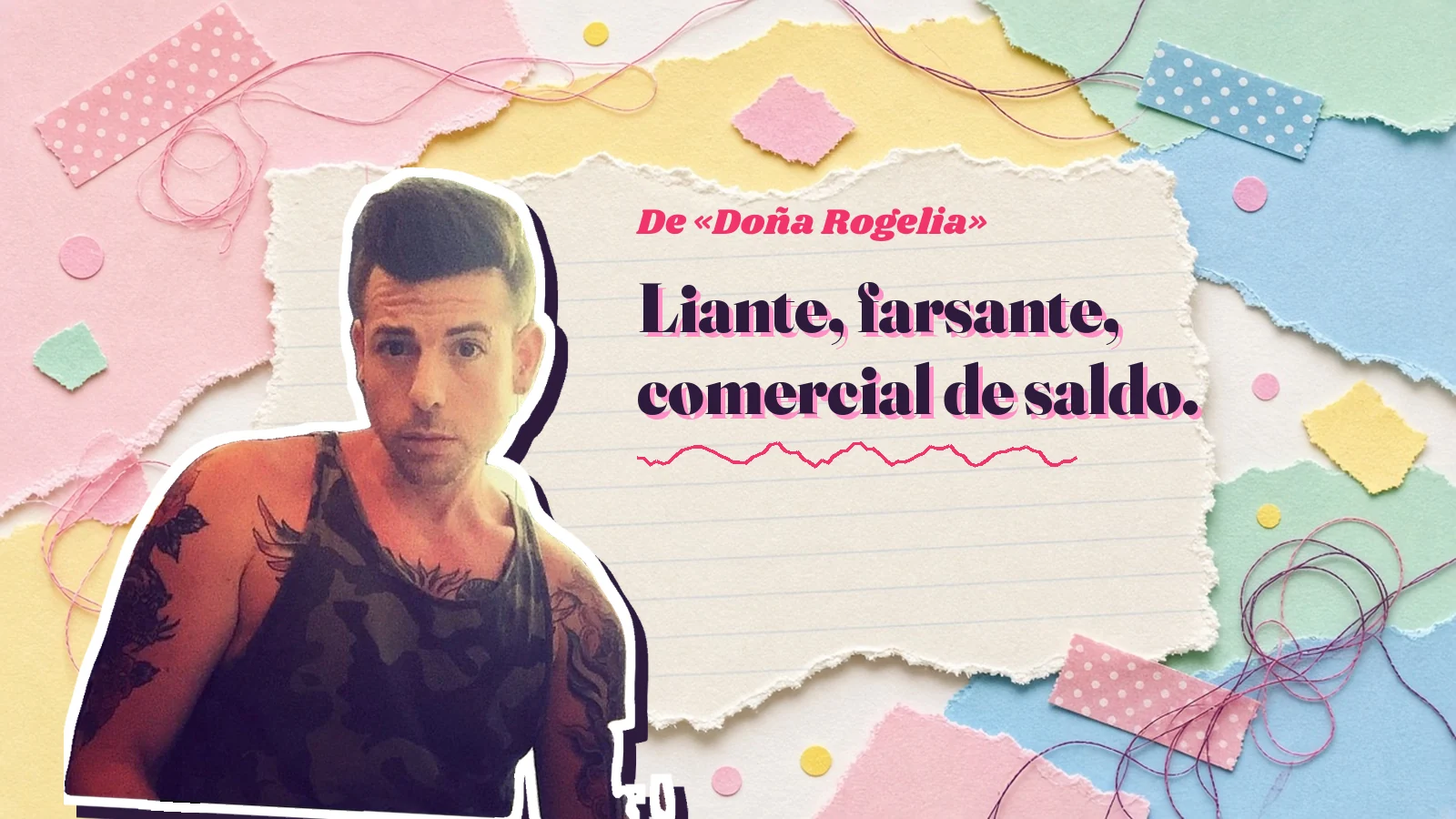
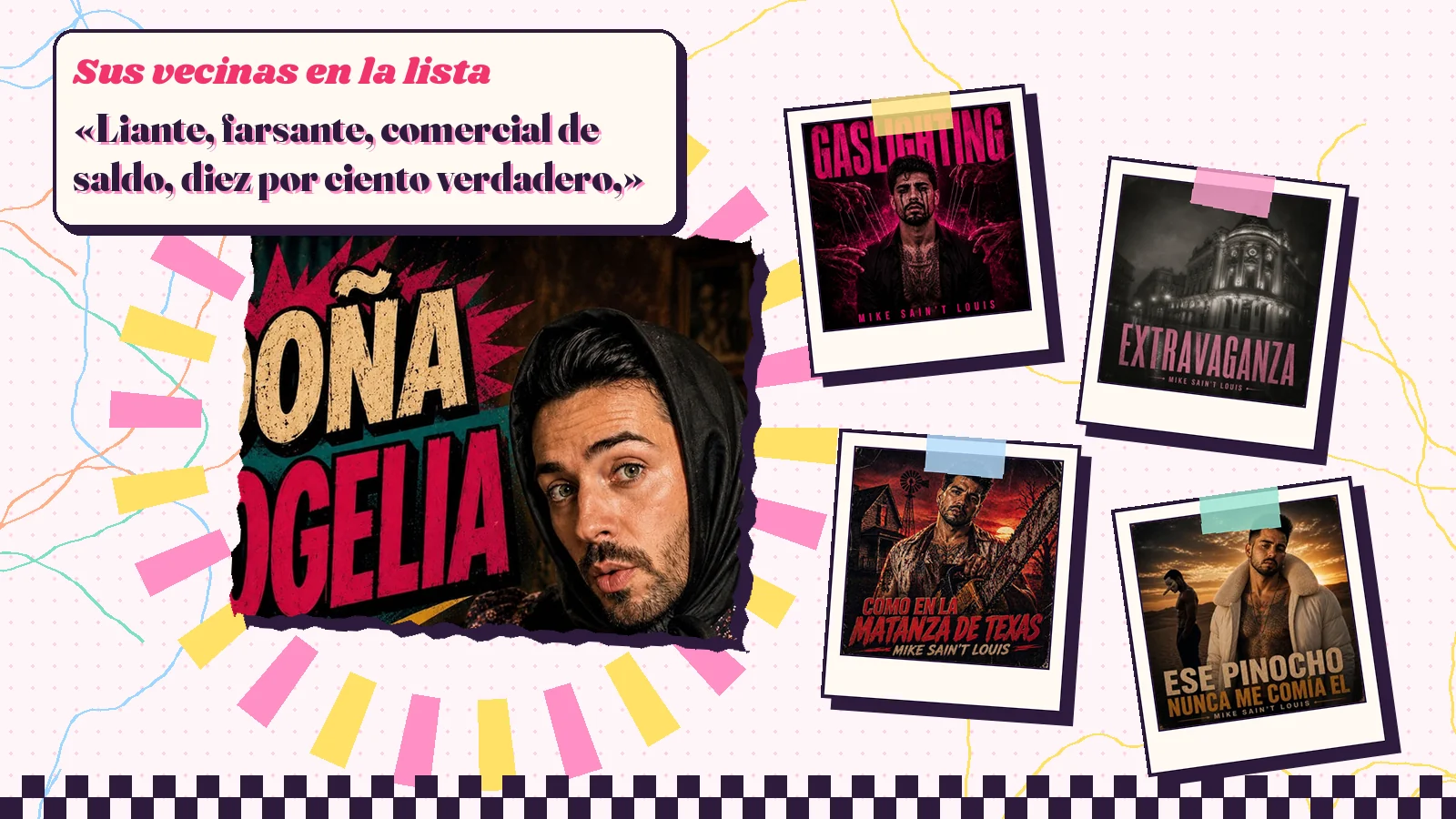
Schemer, fraud, bargain-bin salesman. That's how the central character of «Doña Rogelia» is introduced, single number 122 in my catalogue, from the album «Ojalá se pudiera viajar a Gayfolk». (The full lyric is on gayfolkplanet.com.) I've already written about that song and its ventriloquist's trick. Here I'm using it as a doorway to something else, because that line and the ones after it are almost a dictionary entry: a catalogue of words for saying that someone lies.
Schemer. Fraud. Swindler. And then a sum that still makes me laugh: «diez por ciento verdadero», «noventa por ciento falso», ten per cent true, ninety per cent fake. Like the fabric label on a cheap garment.
This piece is about the vocabulary of lying in my songs. About the words I use to name the liar, where they come from, what shade each one carries, and why Spanish has so many different ways of saying the same thing. It's a theme that turns up a lot in my lyrics, because many of them deal with relationships in which someone wasn't telling the truth. But here I'm less interested in the story than in the words.
Ten per cent true
I'll start with the sum in «Doña Rogelia», because it says something very sharp about how a lie works.
The character isn't one hundred per cent fake. He's ten per cent true. And that, which looks like a comic detail, is actually the key to any lie that works. Total lies get found out straight away. The ones that last carry a little truth inside, just enough to make the rest believable. The ten per cent of truth is the hook. The other ninety is what you swallow along with it.
The song tells it in the language of retail, and that's no accident. Bargain-bin salesman, counterfeit, the damaged-goods section stocked from returns, flea-market coordinator. The whole vocabulary belongs to the sales rack, the faulty product, the knock-off. The liar is presented as merchandise that isn't what the label says. Something you bought believing it was the real thing that turned out to be a copy.
I love that metaphor because it takes out the melodrama and adds humour. Saying someone deceived you sounds like tragedy. Saying they were a product with ninety per cent counterfeit content sounds like a complaint at customer services. And sometimes, after a relationship like that, that's exactly what you need: to stop seeing it as a tragedy and start seeing it as a return.
«Farsante» comes from the theatre
There's something curious about many of the words we use for lying: they come from the stage.
«Farsante» was originally the actor who performed farces, a short comic kind of play that was popular for centuries. Over time the word came to mean someone who pretends to be what they aren't or to feel what they don't. The farce stopped being a genre and became an accusation.
«Hypocrite» went the same way. The word comes from Greek, where it meant the actor, the one who played a part on stage. For the Greeks a hypocrite was simply someone who acted. It was later tradition that turned the trade into a moral failing. And «person», the word we use for any human being, comes from the Latin «persona», which named the mask actors wore in the theatre.
In other words, our languages keep a very old suspicion: that acting and lying are close relatives. And my songs pick that up again and again. In «Gaslighting» the narrator says the other's theatre can't hold up any longer. In «Hipócritas» the official video description talks about cheap theatre. In my lyrics, the liar is someone always performing for an audience that doesn't know it's watching a show.
What amuses me is that I do the same thing, in a way. I write characters, invent situations, put lines in the mouths of people who don't exist. Every song is a little farce. The difference is that the audience knows it's in a theatre. And that changes everything.
Masks and double masks
If the theatre is where the word comes from, the mask is its most repeated image.
In «Extravaganza» there's a character who, little by little, lets the mask show, and the narrator finishes with an exclamation that needs no explaining: what a fake smile. In «Bareback» someone warns, with one of those lines that sound like a grandmother's, to beware the double mask. And in «Como en la matanza de Texas» there's a mask of innocence, hard to suspect, which is practically the definition of a manipulator.
«Careta» is a very Spanish word, the mask of carnival and Twelfth Night parades. It's the cheap mask, cardboard or plastic, the kind you buy at a pound shop for a party. Not a Venetian mask, not a Greek theatre mask. Something more domestic, more everyday. That's why it works so well for ordinary liars: they aren't opera villains, they're people in a bargain-basement mask.
The double mask strikes me as even better. It implies that under the first mask there's another. That just when you think you've finally found out who someone is, it turns out what you saw was fake too. It's an image of layered mistrust, instantly recognisable to anyone who's been through a relationship where every discovery led to another.
And there's the phrase everyone knows: «quitarse la careta», taking off the mask. It's used for the moment someone stops pretending, usually when they no longer need to. In many of my songs that moment is the heart of everything: not the lie itself, but the instant it falls away.
To that Pinocchio
There's no liar more famous than the wooden puppet whose nose grows.
Carlo Collodi published «The Adventures of Pinocchio» in 1883, and since then the character's name has become almost a common noun in Spanish. We say someone is «un pinocho», or that their nose is growing, and everyone understands. He's one of those literary figures who walked out of the book and into street talk.
He turns up several times in my lyrics. In «Ese Pinocho nunca me comía el chocho» the title says it all, with its shameless rhyme, and inside there's a line I think is one of the best in the song: «no voy a mentir, tú sí», I'm not going to lie, you are. A handful of words that hand out the roles. The narrator stands on the side of truth and leaves the other his own part, without needing to insult him. An accusation built from nothing more than a pair of opposed pronouns.
In «La música me está salvando» Pinocchio appears in the farewell: goodbye forever, Pinocchio. And before that there's a rhetorical question, the kind that expects no answer, ending in a direct insult to the liar. There's no fairy-tale humour left there. There's rage.
I like using Pinocchio because he has an advantage over any other word: he's visual. The growing nose is an image anyone can picture. And there's a kind of poetic justice to it, because in the story the lie shows on the body. It's what we'd all love to happen with real liars: for the lie to be visible, for there to be no need to investigate.
He lies, and lies, and lies
There's a device that recurs in several of my songs when they talk about a liar: the verb repeated three times.
In «Carta de recomendación» the narrator, writing about an ex for whoever comes next, sums him up like this: he only lies, and lies, and lies. In «Asqueroso coordinador» almost the same thing appears, said straight to the other's face: you only lie, and lie, and lie.
The repetition does something very specific. It turns lying into a habit, a way of being. It isn't that someone lied once. It's that they lie the way they breathe, continuously, without pause. The verb repeated three times sounds like a drip, like something that never stops. And the «only» at the start matters just as much: he does nothing else. The lie isn't one flaw among many; it's the main activity.
There's a finding in psychology I find fascinating here. In 1977 three researchers, Lynn Hasher, David Goldstein and Thomas Toppino, described what's now called the illusory truth effect: the more often we hear a statement, the more we tend to believe it, even when it's false. Repetition makes things sound true. Liars know this, even if they've never read the study.
What these songs do is turn the trick around. They repeat, yes, but not the lie: the accusation. He lies, and lies, and lies. By sheer repetition, the listener ends up knowing what took the narrator so long to find out.
A whole vocabulary for the same thing
Few languages have as many words for a lie as street Spanish.
There's «trola» and «bola», which sound small, the stuff of children or bars, a fib, a whopper. There's «embuste», older and weightier. There's «patraña», which already implies an elaborate story. There's «cuento chino», a Chinese tale, the lie so outlandish nobody buys it. There's «milonga», used in some places for the line someone spins to reel you in. There's «paripé», the staged lie, the little show put on to look good.
And then there are the euphemisms, which I adore. «Faltar a la verdad», to fall short of the truth, which is how you say lying in a courtroom or a parliament. The «mentira piadosa», the pious lie, forgiven because it supposedly protects someone. Half-truths. Embroidering things. Not telling the whole story.
The proverbs, which have an opinion on everything, deal with this too. You catch a liar sooner than a lame man. A lie has very short legs. They're optimistic proverbs, promising that deceit gets found out quickly. Anyone who has lived through a long relationship with someone who lied knows it isn't always so, that sometimes a lie's legs hold out for six years. But you can see the comfort. The proverb says what we'd like to be true.
In «Doña Rogelia» there's a word I'm especially fond of: «embaucadores», swindlers. The song says that art, like karma, sometimes takes its time, but is infallible against them. To «embaucar» is more than to lie. It's lying to get something, to tangle someone up and profit from it. The «liante», another word from the same song, is first cousin to the swindler: someone who muddles, who mixes things up, who creates confusion so what he's doing can't be seen.
Each word has its shade, and choosing the right one is one of the loveliest parts of writing lyrics. Calling someone a liar isn't the same as calling them a fraud. The liar says false things. The fraud performs them too.
The lie that makes you doubt
There's a kind of lie that has earned its own name in recent years, and I gave it a whole song.
The word gaslighting comes from Patrick Hamilton's play «Gas Light», first staged in 1938 and later filmed several times, most famously in 1944, directed by George Cukor and starring Ingrid Bergman. In the story, a husband manipulates his wife into believing she's losing her mind. Among other things, he dims the gas lamps in the house and then denies the light has changed.
It's a special kind of lie, because it doesn't want you to believe something false about the world, but about yourself. To doubt your memory, your perception, your sanity. In «Gaslighting» the narrator answers with a flat statement: your lie won't silence me. And in «Dientes, dientes» there's another formula of refusal, don't come at me with your cheap fakery, which sounds like someone who's seen the trick far too many times.
What interests me about this word is that it came from the theatre, like «farsante» and «hypocrite». Once again, the lie is named from the stage.
The impostor and the hologram
Some lies aren't about saying something false but about being something false.
In «El impostor» the narrator tells how he found out, after six years, that the other had never been in love with him. And the song doesn't dwell on the big lies but on the details: while one of them had spent a week crying, the other was taking a selfie and adding a filter. On the last day in the house, the narrator heard forced crying. I find that phrase terrible and exact. Forced crying is a counterfeit emotion, a flea-market tear.
Impostor is a very precise word. It isn't someone who lies about something, but someone who passes himself off as who he isn't. He impersonates. He occupies a place that isn't his. In a relationship, the impostor is someone who played the part of the loving partner without being one.
In «El castigo más duro» the image goes even further, into science fiction: the handsome dark-haired boyfriend of seven years turns out to have been a hologram. A partner who was pure projection, pure light without a body. It's a joke, of course, but a joke that says a lot. When you discover someone has lied to you for years, that's exactly how it feels: that what was in front of you was never solid.
Lying in another language
Since many of my songs mix Spanish and English, the vocabulary of lying sometimes crosses from one language to the other too.
English has its own words for this, and some have already slipped into street Spanish. Fake, for instance, used for anything false, from a news story to a smile. Two-faced, which is almost the double mask from «Bareback» in different clothes. Phony, which sounds like a telephone and means fraud. And in the English-speaking playground there's a taunting rhyme, liar, liar, pants on fire, the childhood cousin of Pinocchio's nose: the idea that a lie ends up showing on the body, even if it's as a blaze.
It amuses me that in every language I know, the liar is described with similar images. Double faces, masks, growing noses, burning trousers. As if everywhere people had needed to invent a visible sign for something that, by definition, can't be seen.
I'm not going to lie
There's another side to all this that also turns up in my lyrics: the narrator who boasts of telling the truth.
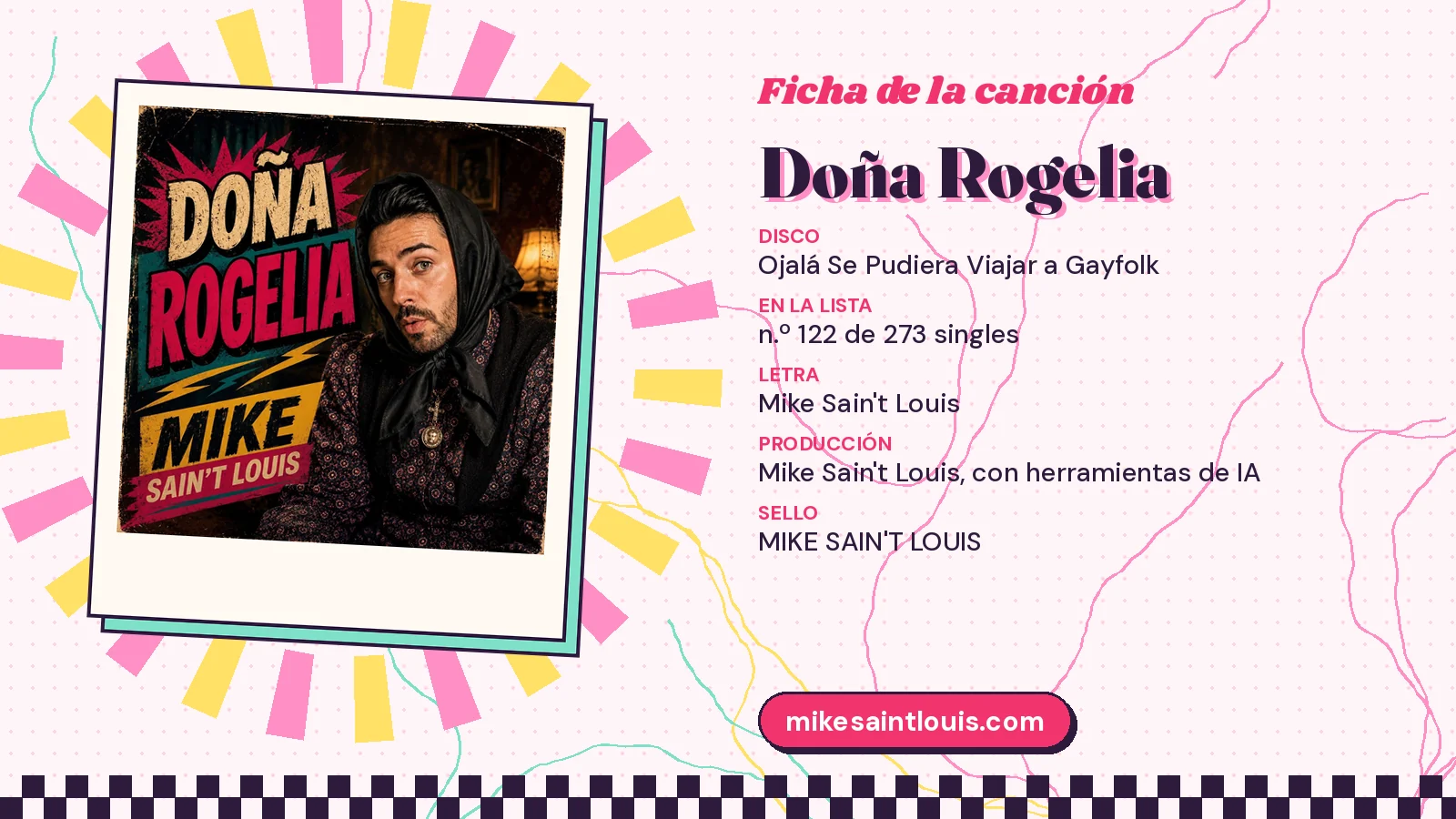
That «I'm not going to lie, you are» in «Ese Pinocho» is a stance. Whoever's speaking in the song takes the side of sincerity, and that gives them the right to accuse. It's a very heartbreak-song position. The speaker is the honest one; the other, the liar. And often that's just how it is.
But I like not trusting that stance completely, not even in my own songs. In Spanish there's a phrase we've all heard, «es que yo soy muy sincero», I'm just very honest, which often serves as an excuse to say something cruel. Sincerity can be a mask too. That's why I like songs where the narrator isn't perfect, where he exaggerates, contradicts himself or admits he's lied too, to protect himself. A narrator who only tells truths is as unbelievable as a liar who only tells lies. What sounds real is the mix.
Fake people
Sometimes the lie doesn't come from one person but from a whole atmosphere.
In «Judith Becker» the chorus says it's better to be alone with my animals than surrounded by fake people, and the word «falsa» stretches out in the published lyric like a long lament. The same song talks about fraudulent partners who always cheat on you. Here there's no single liar any more; there's a world that feels fake, and the response is to withdraw.
I understand that response, and the song tells it with humour and with truth. But I want to say something that isn't in the lyric. When someone has spent a long time surrounded by lies, they can end up distrusting everyone, isolating themselves, feeling there's nobody to lean on. That weighs a great deal. If you recognise yourself there, it isn't your fault, and you don't have to carry it alone. Talking to someone you trust or to a professional helps. And if at any point you feel you can't go on, or you think about hurting yourself, in Spain you can call 024, free and open around the clock, or 112 if there's immediate danger. If you're outside Spain, call your local emergency number.
A lie that tells the truth
I'll end with a paradox that comes with me every time I write.
My songs are full of invented characters. The names are fictional, the situations exaggerated, the lines put in the mouths of people who don't exist. By any dictionary's rules, a song is a fabrication. And yet, when someone hears a song about a liar and recognises their ex, their boss or their fake friend, what they feel is that the song is telling the truth.
Picasso once said something that's been quoted endlessly: that art is a lie that brings us closer to the truth. I don't know whether I'd agree with everything Picasso thought, but I understand that line very well. A lyric can be ninety per cent invented and ten per cent real, like the character in «Doña Rogelia» but the other way round. What's invented is the form. What's real is what you feel.
The difference between a song and a lie lies in the pact. The listener knows it's a song. Nobody is trying to deceive them to get something out of them. That's why the fraud on the stage and the fraud in life, though they share a word, are opposites. One pretends so that you'll see something. The other pretends so that you won't.
Frequently asked questions
Which Mike Sain't Louis songs deal with lying? Among others, «Doña Rogelia» (schemer, fraud, ten per cent true), «Ese Pinocho nunca me comía el chocho», «Carta de recomendación» (he lies, and lies, and lies), «Gaslighting», «El impostor», «Extravaganza» (the mask) and «Judith Becker» (fake people).
Where does the word «farsante» come from? From the theatre: the «farsante» was the actor who performed farces, short comic plays. Over time it came to mean someone who pretends to be what they aren't. «Hypocrite», from Greek, also originally meant an actor.
What is gaslighting? A form of manipulation in which someone makes you doubt your own memory or perception. The name comes from Patrick Hamilton's play «Gas Light» (1938) and its 1944 film adaptation.
Who writes these songs? Mike Sain't Louis, a lyricist, composer and music producer from Madrid who presents himself as the first AI songwriter. The music and vocals of his songs are made with artificial intelligence.
Where can I get help if I feel isolated after a relationship like that? Talk to someone you trust or to a professional. If you feel you can't go on, in Spain call 024 (free, 24 hours); in immediate danger, call 112. If you're outside Spain, call your local emergency number.