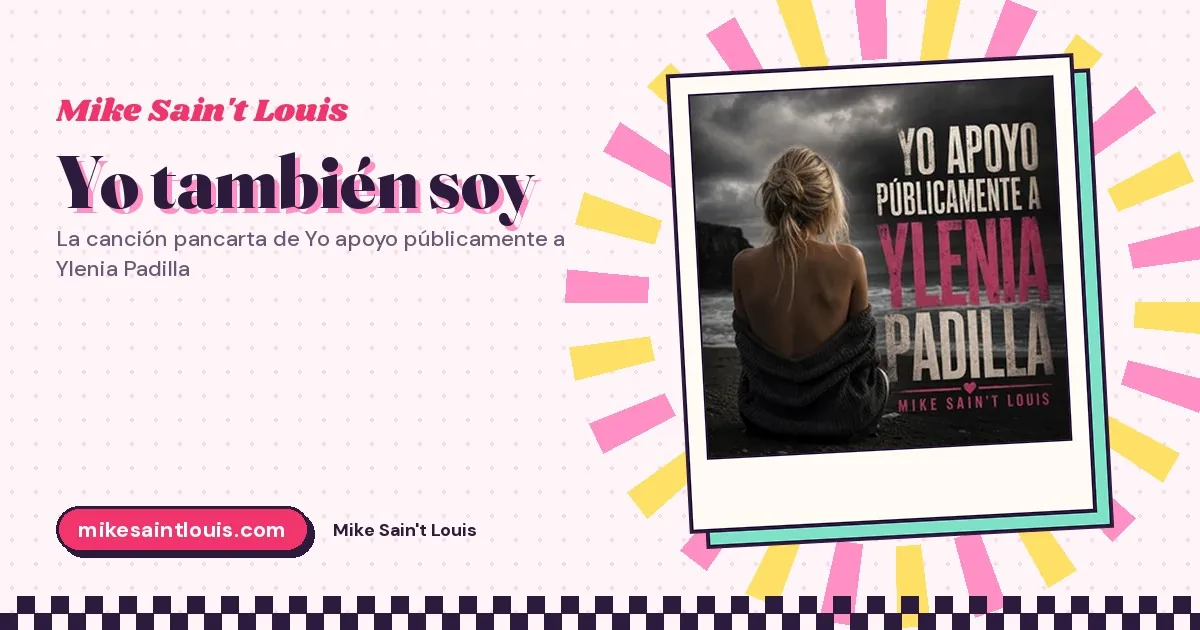
By Mike Sain't Louis ·
Me too: the placard song inside Yo apoyo públicamente a Ylenia Padilla
Some sentences carry no information at all and still say everything. "Me too." "I'm with you." "Count me in." They add not a single new fact, and yet sometimes they're the only thing a person needs to hear all week. Yo apoyo públicamente a Ylenia Padilla (I publicly support Ylenia Padilla) is made almost entirely of sentences like that, which is exactly why I love it.
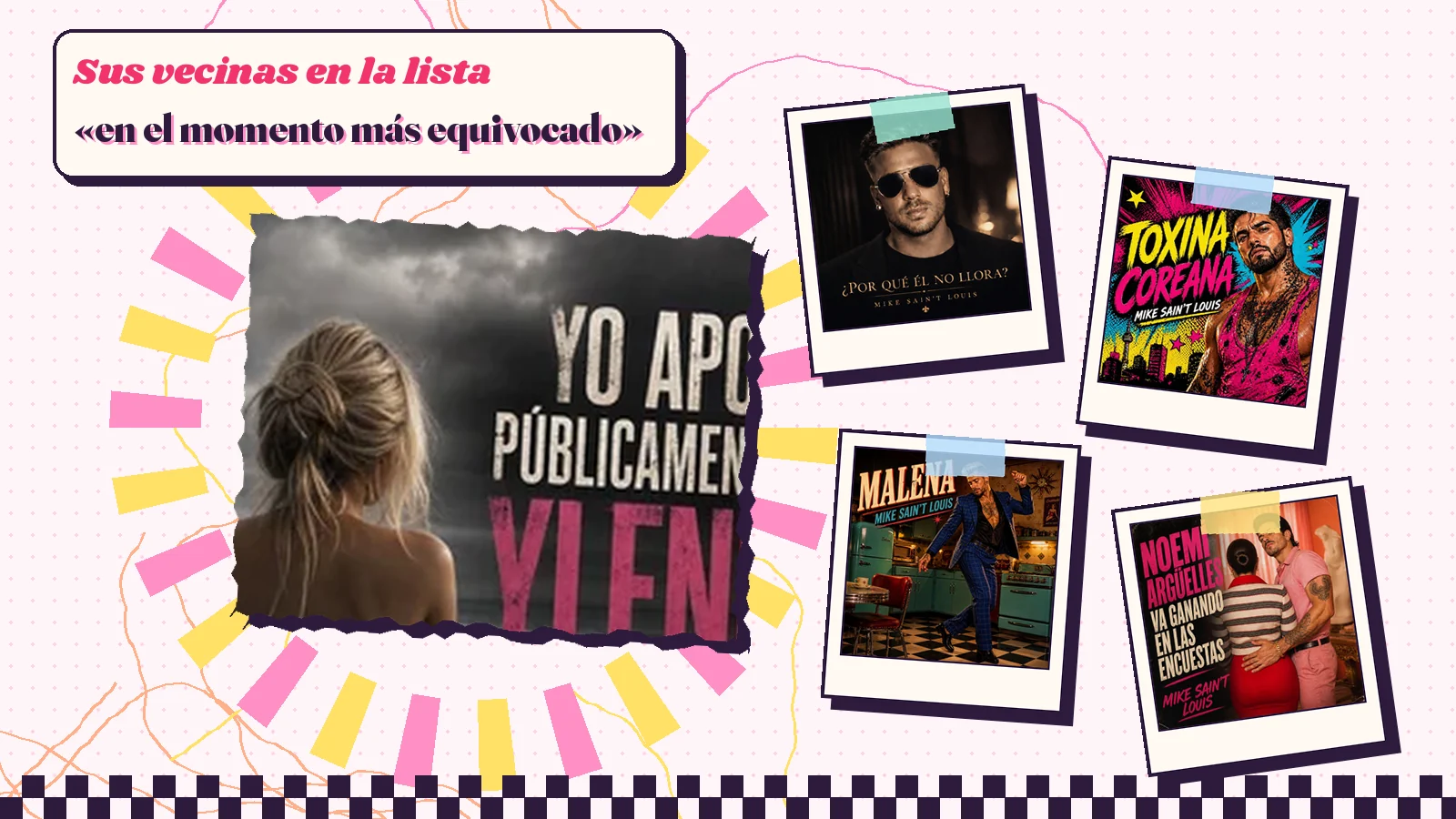
On the song page I said it works like a protest placard. In the post about ¿Por qué él no llora? (Why doesn't he cry?), its sister song, which shares much of the chorus, I wrote about how that support gets folded into a breakup. Here I want to do something else: look at the song as if it were a mechanism, and take it apart piece by piece. One proper name, five verbs, one adverb and a single verse with a bit of story in it. That's all it takes to raise a whole song. The full lyrics are published and take less than a minute to read, so keep them open alongside this.
A song shaped like a placard
Placards have rules. Few words. Big letters. One idea per piece of cardboard. And above all, something a crowd can chant without thinking, because nobody at a march has time to read a paragraph. People walk past, glance, keep three words and move on.
These lyrics follow those rules to the letter. There's no story with a setup and a payoff. No place, no particular night. Just a declaration of loyalty, repeated with small variations until it's stuck in your head. It's the opposite of my more narrative songs, like Toxina coreana (Korean toxin), which has a friend, a touch-up and a finger pointing back at the accuser. Here there's no scene. There's a slogan.
I'm drawn to that format because it forces you to write with almost nothing. When you only have four lines, each one carries real weight. You can't hide a weak idea between two strong ones. If a line doesn't work, you notice by the second repetition, and by the third it's embarrassing. That's why short, repetitive songs are much harder than they look: they forgive nothing.
Five verbs, one ladder
The first thing that jumps out when you read the lyrics slowly is how many different verbs are used to say, apparently, the same thing. To understand. To be. To defend. To be in favour of. To publicly support. Line them up and they aren't synonyms. They're rungs.
Understanding is the first rung, the most private one. You can understand someone without getting off the sofa. It happens inside your head, and nobody has to know.
Being, or being like, goes further. It's identification: saying that what's happening to that person could happen to you, or already has. That's when you stop watching from the outside.
Defending is something else again. Defending implies an attack: someone is saying something and you answer back. You're no longer alone in your head. You're in a conversation, and you've picked a side.
Being in favour sounds almost like a vote. It's raising your hand. There's a whiff of residents' meeting about it, of a show of hands, of "who's in favour?" and you saying "me".
And publicly supporting is the top rung. It means signing with your full name. Doing it in front of everyone, knowing somebody is going to give you a funny look.
The lovely thing is that the song climbs up and down that ladder constantly. It doesn't go from the bottom rung to the top and stay there. It shuffles the verbs, steps back, repeats. Just like anyone who really stands by someone: one day you only understand, another day you defend them over dinner, and another you dare to write it in capital letters, the whole sentence, without watering it down.
From "I'm Spartacus" to "I am too"
The line that opens the lyrics has a very long pedigree. "I am too" is one of the oldest solidarity formulas I know, and it turns up again and again in popular culture and in history.
The most famous scene is probably the one from "Spartacus", Stanley Kubrick's 1960 film. The Romans are hunting the leader of the slave revolt to punish him, and one by one his comrades stand up and say "I'm Spartacus". None of them is, and all of them are. Identity turns collective to shield a single man. The scene has been parodied so often that it's part of the language now.
Another textbook case is John F. Kennedy's speech in West Berlin in June 1963, with his "Ich bin ein Berliner". An American president declaring, in German, that he too was a Berliner, in a city split by a wall. Much closer to our time, in January 2015, after the attack on the magazine Charlie Hebdo in Paris, millions of people wrote "Je suis Charlie" on placards and profile pictures.
What all those sentences share is that none of them is literally true. The man who says "I'm Spartacus" isn't Spartacus. Kennedy wasn't from Berlin. And the people writing "Je suis Charlie" almost never worked at a satirical magazine. They're solidarity fictions, impossible sentences spoken so that someone else won't be alone.
The song takes that solemn formula and applies it to a Spanish television personality. "Yo también soy Ylenia Padilla" (I'm Ylenia Padilla too). That's the joke, of course: the gap between the grandeur of the formula and the everyday ring of the name. But that's also the truth of it: the formula works just the same. The person you stand beside doesn't need to be a historical hero for the gesture to mean something.
Who Ylenia Padilla is, in two lines
For anyone reading this outside Spain, the name needs a little context. Ylenia Padilla is a very familiar face on Spanish television. She became famous in 2012 on "Gandía Shore", the MTV reality show, and later appeared on programmes such as "Gran Hermano VIP", the celebrity edition of Big Brother. For many people my age she's part of the TV landscape of the last decade, like certain theme tunes or certain studio sets.
And that's where I stop, because the song goes no further. It says nothing about her life, offers no opinion on her relationships and comments on no controversy. There's no gossip. It uses the name the way you use a flag: to show which side you're on, not to talk about the fabric.
That matters to me. Writing about real people comes with responsibility. You can joke about pop culture, you can pay tribute, you can use a name as a symbol. What doesn't interest me is inventing or judging. This song judges no one, except perhaps a little the people who judge too fast.
The adverb that changes everything
Of all the words in the lyrics, my favourite is "públicamente", publicly. It's a long, bureaucratic word, almost press-release language. It sounds like something a spokesperson says from behind a lectern. Dropped into a pop song, it's both comic and deadly serious.
Because supporting someone in private is easy. We all do it. You send a message, you give them a hug when nobody's looking, you tell them "I get it" in the kitchen while everyone else is in the living room. The hard part is saying it through a megaphone, in front of the group, when the group has quietly decided that person is this week's target.
The internet has made that gap even wider. Today it's very easy to comment, and very easy for your comment to stay up forever. Plenty of people support in silence: they read, they nod, maybe they leave a discreet like, but they write nothing that could compromise them. Attacks, meanwhile, tend to be loud. The result is that the person in the eye of the storm sees a hundred insults and no support, even when lots of people are actually on their side.
That's why the song's gesture feels so valuable to me. It says what many think and few write. It signs with a full name. It turns quiet support into support with a loudhailer.
The only verse with a story
Amid all the slogans there's a single verse that tells us something. It's the one explaining why the narrator identifies with her: because they too have felt at some point "que todo el mundo me ha fallado", that everyone had let them down, that people turned their backs, and not at just any moment but "en el momento más equivocado", at the worst possible moment.
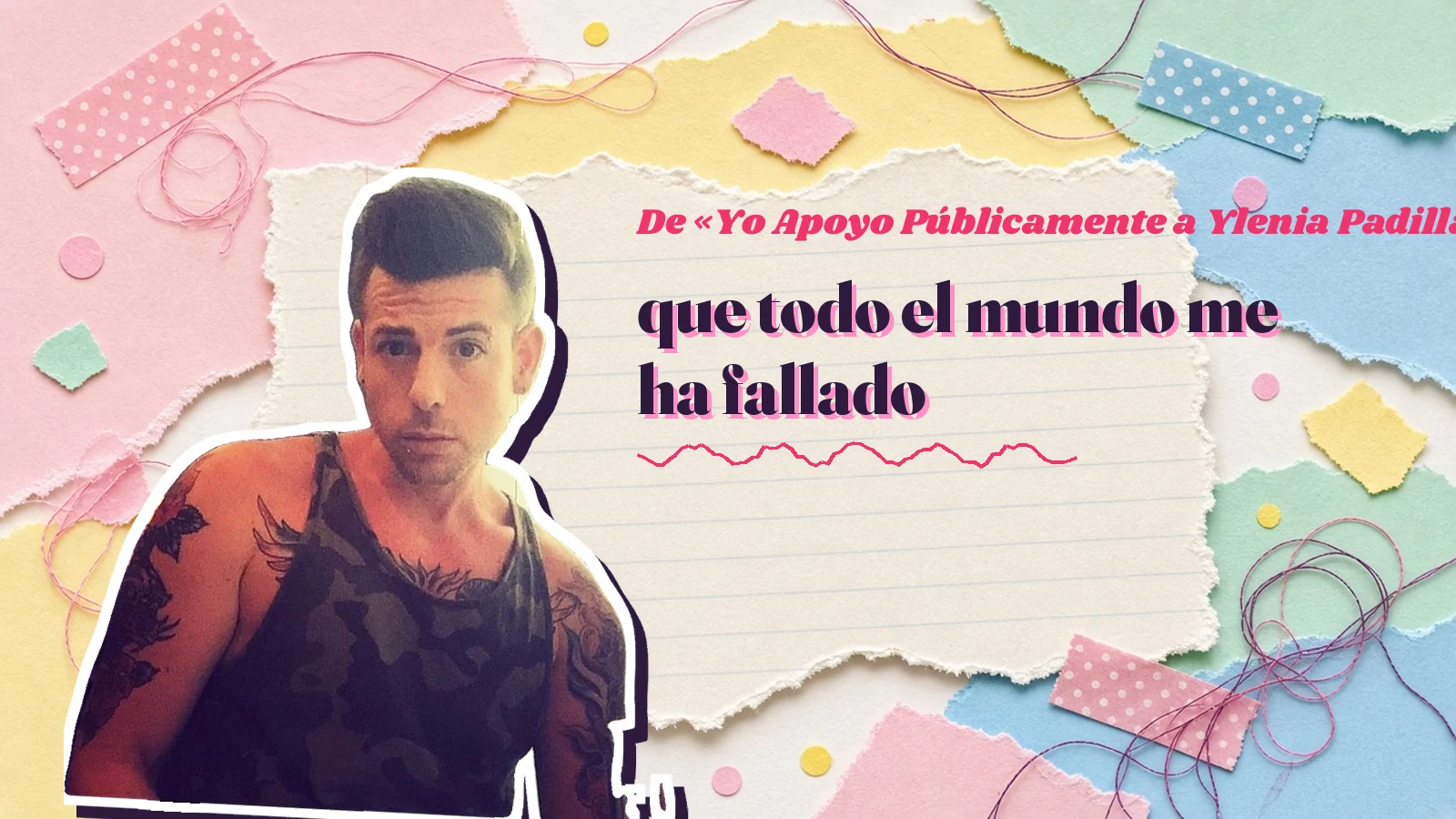
That last line is the one I care about most. Letting people down is human; we all fail someone sooner or later. But there are moments when failing someone hurts three times as much: when they're already on the floor, when they most needed someone to pick up the phone, when what they were going through was hard enough without loneliness piled on top.
That verse is the hinge between the joke and the wound. Without it, the song would be one long meme. With it, it's a song about the loneliness of being singled out. And that loneliness is never spelled out. We don't know what happened to the narrator, who let them down or why. That's how it should be, because it leaves room for each listener to drop their own story into the gap.
Many people who hear the song have a moment like that tucked away somewhere. The friend who vanished when the trouble started. The family that looked the other way. The group that stopped inviting you precisely when you needed it most. You don't have to be famous to feel an entire country turn its back on you. Sometimes a WhatsApp group is enough.
Women on television and the queer gaze
There's a very clear tradition in gay culture of adopting women in the public eye as icons, and not always for the reasons you'd expect. It isn't only that they're glamorous or have great songs. Often the bond is something else: watching them get judged, mocked, turned into a national punchline, and carry on anyway.
The phrase "friend of Dorothy", which for decades let people in the English-speaking world ask discreetly whether someone was gay, comes from the devotion to Judy Garland and "The Wizard of Oz". In Spain we've had our own queens: folk divas, revue stars, presenters, contestants. Women that part of the country looked down on and that the queer community looked up to. Some of that history shows in other songs in my catalogue, like Malena, where the tribute to a diva comes with its own wink of irony.
I think the bond comes from this: many LGBTQ+ people know what it's like to be laughed at for being too much. Too camp, too intense, too visible. When we see a woman on TV get that same mockery, we recognise the machinery. And we defend her a little the way we wish someone had defended us in the school playground.
Yo apoyo públicamente a Ylenia Padilla sits squarely in that tradition. It's fandom, yes, but fandom with a memory.
Camp: taking the light things seriously
In 1964 Susan Sontag wrote her famous "Notes on Camp", and one of the most quoted ideas is that camp means taking the frivolous seriously and the serious frivolously. This song is a textbook example.
On one hand, everything about it sounds like a joke: the proper name repeated like a mantra, the studio-placard tone, the outsized solemnity of saying "I publicly support" as if issuing an official statement. On the other hand, the message underneath is as serious as it gets: don't leave people on their own when the whole world is laying into them.
That mix is one of my favourite things to do when I write. Say it with a completely straight face and it sounds like a sermon. Say it entirely as a joke and nobody takes it seriously. Camp lets you say something important with a smile, and the smile lowers people's guard just enough for the line to land.
Repetition as an argument
Someone might think that repeating the same name so many times is lazy. It isn't. Repetition is an ancient tool, and folk songs, prayers, protest chants and playground rhymes all use it for the same reason: what gets repeated, sticks.
We know this from marches. The chants that work are short and can be shouted a hundred times in a row without losing force. Each repetition brings in more people. The first time, one person shouts it; by the tenth, the whole street does.
Something similar happens in the song. The first time you hear "Yo defiendo a Ylenia Padilla" (I defend Ylenia Padilla), you laugh. By the third, you start to suspect it's sincere. By the sixth, if you're paying attention, you're not hearing a joke anymore: you're hearing someone who refuses to change their mind even though the majority are giving them looks. The persistence becomes the argument.
I've worked this way in other lyrics. In the song about Noemí Argüelles (Noemí Argüelles is ahead in the polls), politics turns into a TV spectacle. Here it's the reverse: a name from the TV studio turns into a cause.
How you stand by someone in real life
I've often wondered what it means, in practice, to publicly support someone who isn't famous. Most of us will never be asked to sign a manifesto. But we do find ourselves, again and again, in small situations where we have to choose.
The dinner where someone starts mocking an absent friend and everyone laughs. The team where it's silently decided that the new girl is weird. The chat on the stairs where the neighbour from the third floor becomes the gossip of the month. In every one of those scenes there's a moment, very brief, when someone could say "hang on, I don't see it that way". And almost nobody ever does.
You don't need a speech. Sometimes it's enough not to laugh. To change the subject. To message the person who's been singled out afterwards and ask how they're doing. Tiny gestures, but they're the exact opposite of turning your back at the worst possible moment.
I also think support doesn't mean agreeing with everything. You can think someone got it wrong and still refuse to join the pile-on. The song makes that clear in its own way: it doesn't say Ylenia is right about anything in particular, it says the narrator understands her and stands beside her. Those are two different things, and mixing them up is what makes so many people prefer to stay quiet.
And then there's the support you give yourself, which is the hardest of all. When the narrator says they're Ylenia too, they're partly defending themselves. They're saying: what happened to me wasn't fair, and I won't pretend it was. There's something very healthy in that.
An album that sides with the singled-out
The song is part of Descubierto un nuevo planeta llamado Gayfolk (A new planet called Gayfolk discovered), the first album in the Planeta Gayfolk trilogy. It's an album full of people who feel left out: out of the couple, out of the group, out of what's expected of a man. It makes sense that, in the middle of that landscape, there's a song about loyalty rather than love.
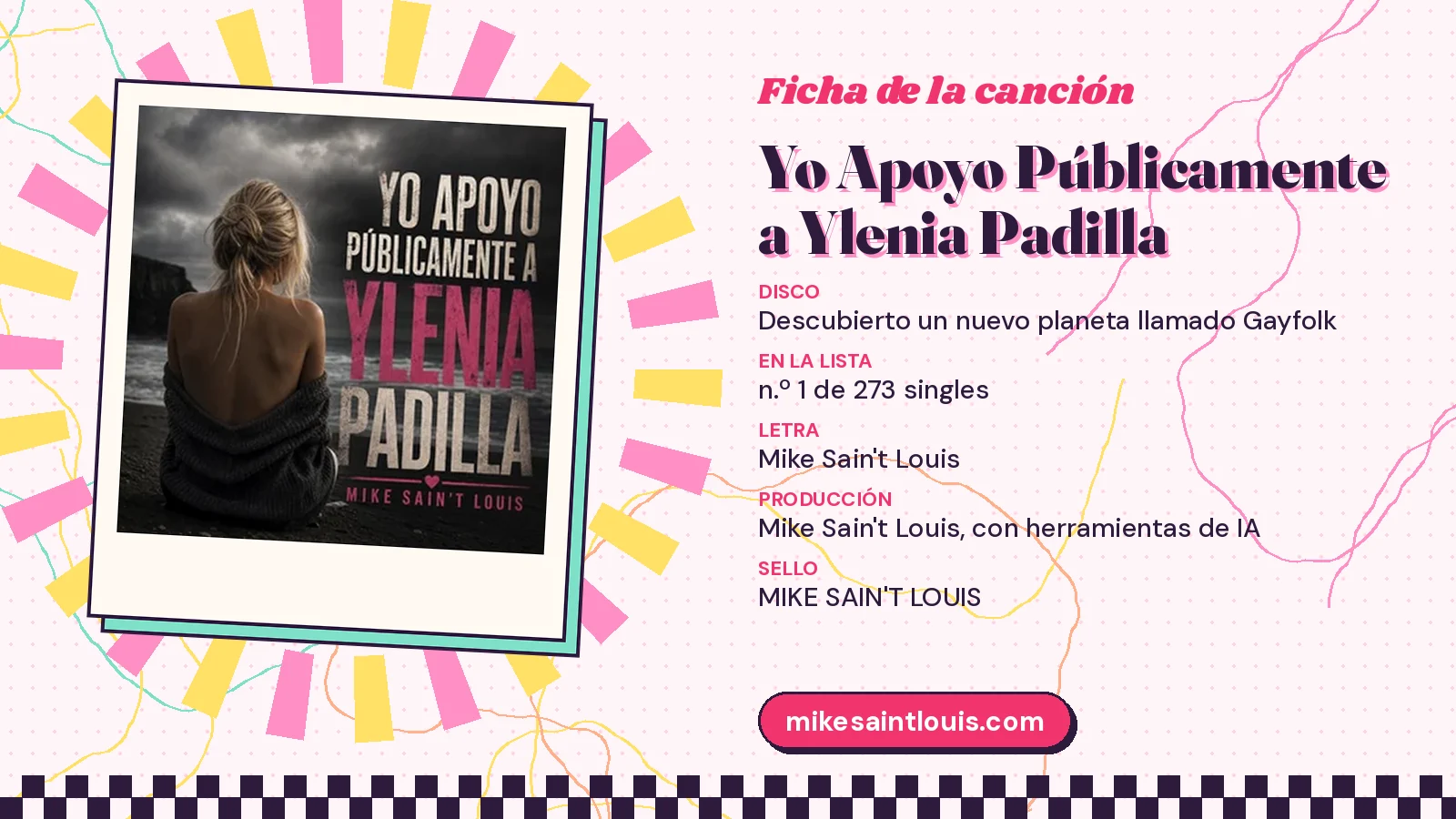
I like to think of this song as the album's outstretched hand. Other tracks complain, cry, take revenge or laugh. This one simply stands next to someone and says: I'm here. With its sister, the one about tears that never come, it makes a curious pair: one looks inward, at a breakup of one's own, the other looks outward, at someone else's pain. Both end up in the same place, which is seeing yourself in the person who's struggling.
What the song doesn't do
It also matters to me to say what this song is not. It isn't a defence of anything specific anyone has done or said. It takes no side in any real dispute, because it doesn't mention one. It doesn't pretend to know more than it knows.
It's a song about an attitude. Preferring empathy to a lynch mob. Thinking twice before joining the chorus. Remembering that behind every much-discussed person there's someone who gets up in the morning, looks in the mirror and has to get on with life while half the country weighs in.
Heard that way, the proper name almost works as an example. It could be anyone who's been under the spotlight. What remains is the gesture, and the gesture holds for all of them.
If you feel like this right now
If you're going through a stretch where it seems everyone has turned their back on you, let me say this plainly: that feeling lies a little. There are almost always more people on your side than dare to say so. Find one person, just one, you can really talk to.
And if that loneliness weighs so much that your own thoughts frighten you, ask for help today. In Spain you can call 024, the suicide prevention line, free and open around the clock, or 112 in an emergency. If you're outside Spain, call your local emergency number.
Who this song is for
For anyone who has read a hundred cruel comments about someone and written the first kind one. For anyone who defended a colleague in a meeting even though it cost them. For anyone who knows what it's like to be the talk of an entire town. For anyone who once felt let down at the worst moment and swore never to do that to anyone else.
And also, why not, for anyone in the habit of passing quick judgement on other people's lives. Let them listen twice and try standing, even for three minutes, on the other side of the placard.
How to listen
The song is on the singles page and on every platform, and you can download it free from the downloads section. Play it loud, and if you know the words by the second chorus, job done: you're already on her side.
As a lyricist, composer and music producer, I love finding out that so few words can say something so big. The music and vocals are generated with artificial intelligence, but standing beside someone who's alone is one of the most human things I know.
Frequently asked questions
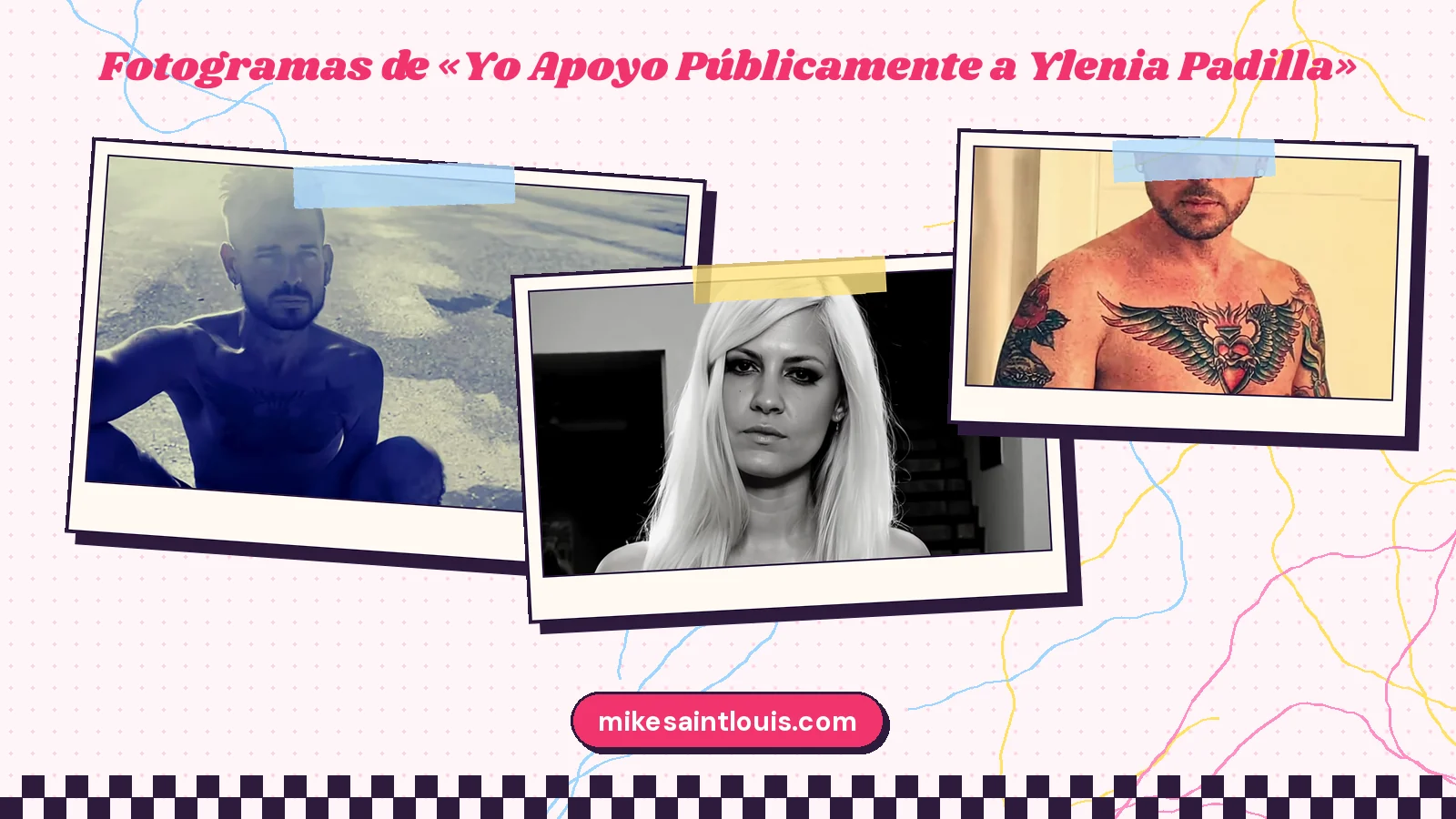
What is Yo apoyo públicamente a Ylenia Padilla about? About siding with someone who's been talked about endlessly. The lyrics repeat, with different verbs, that the narrator understands, defends and supports Ylenia Padilla, and explain why: they too have felt that everyone let them down and turned their backs at the worst moment.
Does the song talk about Ylenia Padilla's private life? No. It uses her name as a symbol of someone exposed and judged in public, but it says nothing about her life, gives no opinion on her relationships and comments on no controversy.
What does it have to do with "I'm Spartacus"? "I am too" belongs to a long line of solidarity formulas, like the scene in Kubrick's "Spartacus" (1960), Kennedy's "Ich bin ein Berliner" (1963) or "Je suis Charlie" in 2015. The song applies that solemn formula to a TV personality.
How is it related to ¿Por qué él no llora? They're sister songs on the same album and share much of the chorus. One focuses on support; the other folds that same support into a breakup.
Who makes this song? Mike Sain't Louis, a lyricist, composer and music producer who calls himself "the first AI songwriter": he writes the lyrics and directs the production, and the music and vocals are generated with artificial intelligence.