
By Mike Sain't Louis ·
Voting for a fictional character: Noemí Argüelles, the polls and politics as a show
Every time an election comes round, the whole country turns into a waiting room. The TV news opens with colourful charts, the panel shows argue over tenths of a point as if they were stoppage-time goals, and in every WhatsApp group someone always forwards the latest poll with a scared-face emoji. Polls don't decide anything, but it feels as if they do. They're the soap opera that keeps us hooked until the final episode.
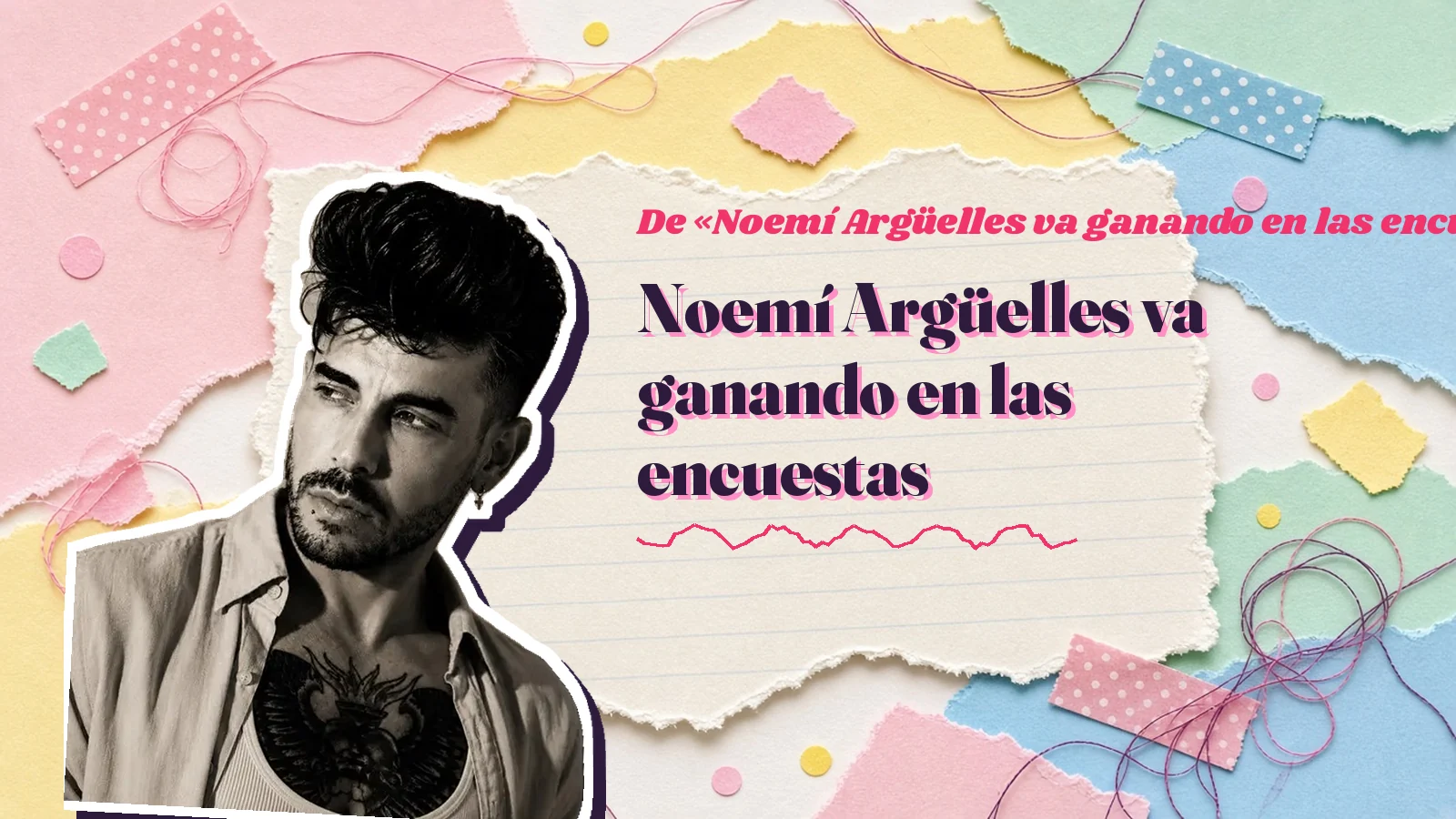
«Noemí Argüelles va ganando en las encuestas» (Noemí Argüelles is ahead in the polls) starts right there, with that obsession with surveys, and turns it upside down in the most absurd way I could think of: by putting a woman who doesn't even exist in the lead. On the song's own page I've already talked about its party mood, and the full lyrics are published. Here I want to go somewhere else: to who Noemí Argüelles is, to why a song like this has something political about it even though it doesn't mention a single policy, and to what it says about us that, when we imagine a victory, we pick a fictional character.
Who Noemí Argüelles is
For anyone who doesn't know her, Noemí Argüelles is a character in «Paquita Salas», the series created by Javier Calvo and Javier Ambrossi, known in Spain as los Javis, in which Brays Efe plays a talent agent for actresses whose glory days are behind her. Noemí is played by Yolanda Ramos. She first appears in the first season, in the episode «Divacel», as a saleswoman for that miracle product, and over the seasons she gains more and more screen time until she becomes one of the audience's favourites.
What defines the character is her ability to reinvent herself. Saleswoman, beautician, improvised press officer and, in the third season, «community manager de la vida», community manager of life, as she introduces herself. She's a hustler who uses words she doesn't always have a grip on, who wades into every puddle and who walks out of each disaster with her head held high. Yolanda Ramos herself has explained it in interviews: the character makes people laugh because, deep down, there's something tragicomic about her. And that role won her a Feroz award.
So it's no surprise that a figure like that ends up in a Planeta Gayfolk song. She's exactly the kind of character queer culture adopts as its own: a survivor with no qualifications and no godparents, more nerve than means, who refuses to disappear.
The premise: a hustler in the lead
The song is built on a very simple idea. Noemí Argüelles is ahead in the polls. We don't know what she's running for, or with which party, or on what platform. It doesn't matter. All that matters is that she's winning, and that this has consequences.
The consequences arrive in the opening. The published lyric shouts it like a breaking-news headline: «¡Están reunidos, están reunidos!», they're meeting, they're meeting! Who? Elon Musk and Donald Trump. And they are, the lyric says, crestfallen and very well hidden.
That's the whole joke. On one side, a fictional woman, working-class, with a name that sounds like the neighbour from the fourth floor. On the other, two of the most talked-about men in the world, one with his fortune and his rockets and the other with his long political career. And the song imagines that her mere rise in the polls forces them to meet in secret, like a conspiracy thriller on a village-fête budget.
I think it's important to be clear about one thing: the song says nothing specific about either of them. It attributes no actual event, statement or decision to them. They appear as symbols of power, the way «the boss» or «the king» appears in a joke. What the lyric stages is a reversal of hierarchies, not a portrait. I already have another song, «Elon Musk ha anunciado», which plays with the idea of the grandiose announcement, and in both the mechanism is the same: take someone who fills an enormous amount of space in the news and drop them into a world where the rules are Gayfolk's.
Power, hiding under the table
There's something very old about that image of the powerful in hiding. Satire has been doing the same thing for centuries: taking whoever is in charge and putting them in a ridiculous situation. Court jesters did it, carnivals still do it, and the «chirigotas» of Cádiz, the satirical carnival groups, have turned it into an art. The powerful figure who seems untouchable in real life has to hide in the song.
What I like about this version is that the cause of the panic isn't a revolution or a scandal. It's a poll. In other words, something that in theory has no real effect at all. And yet it's enough for them to meet, lose heart and hide. It's a way of laughing at how jumpy those in charge can get about anything they don't control.
And it's also a way of laughing at ourselves, because we treat polls as if they were results. The song pushes that anxiety to the point of absurdity: if polls can send two of the most powerful men on the planet into hiding, imagine what election day will do.
Smacked in the face by a door
After the scene of the powerful in hiding, the lyric changes shot and goes to the body. «Me han pegado un ostión en la cara con la puerta», I've been smacked in the face by a door. «No me había puesto antes la anestesia», I hadn't had the anaesthetic first.
I love how physical this is. There's no analysis, no political commentary. There's a blow from a door, the kind you get when someone flings it open without looking. And then a line straight out of the dentist's chair: I hadn't had the anaesthetic. In other words, the blow caught me off guard, unprepared, with nothing to soften the pain.
Who takes the hit? The lyric doesn't say, and that allows two readings. It could be the narrator who gets slammed by the news, like when you read a headline you weren't expecting. Or it could be them, the ones in hiding, who've been hit full in the face by the poll. I prefer to leave both readings open, because both work: when polls surprise, they hurt somebody.
In Planeta Gayfolk songs the humour almost always goes through the body. Blows, falls, absurd injuries. It's a way of bringing very abstract things down to earth. Politics is debated in TV studios, but it's suffered in the face.
«Ojo al dato»
There's an expression in the lyric that I find hilarious: «¡Pues claro! Ojo al dato», well, of course! Mark this one.
«Ojo al dato», literally «eye on the data», is one of those phrases that belong to Spain's collective memory. It's pure radio presenter, the kind who said it just before dropping a statistic or a result worth underlining. By slipping it into a song about polls, the lyric steps into the shoes of a devoted commentator, the kind who relishes every tenth of a point.
And just before it comes the knowing line: «No puedes negar que les detestas», you can't deny you can't stand them. The song looks at the listener and winks. It doesn't ask, it asserts. It takes for granted that we share the same mischievous pleasure in watching the powerful squirm. It's a device I use a lot, speaking straight to someone, as if we were at a bar counter going over the news.
The chorus as a campaign chant
The chorus is a single repeated line: because Noemí Argüelles is ahead in the polls. Three times in a row, then again, then again.

That repetition imitates something we all know: the rally chant. Campaign slogans work like that. They explain nothing, argue nothing, convince no one with data. They repeat. And by sheer repetition they start to sound true. Say it three times and it's in the air. Say it ten and it's inevitable.
The fun part is that the song uses that technique for something completely empty of content. We don't know what Noemí proposes, what she stands for or who she's up against. We only know she's winning. It's a parody of politics as pure emotion, where what matters isn't what you vote for, but the feeling of being on the side that's rising.
And at the same time there's something sincerely celebratory about it. There's joy in that chorus, the kind you feel on election night when things go the way you wanted. The song laughs at the mechanism, but it also lets itself get carried away by it. Like almost everything I do, it sits halfway between mockery and affection.
Polls as a soap opera
It's worth pausing on the polls themselves for a moment, because they're the real engine of the song. In Spain they even have their own legal ritual: electoral law bans publishing polls in the five days before the vote. That last week of silence feels almost like the break before a series finale, when there are no more trailers and all you can do is wait.
And like any self-respecting soap opera, polls have their plot twists. One day a party goes up, the next it goes down, a tenth of a point becomes a headline and a statistical tie fills a whole afternoon of panel shows. Some people follow them with the same passion they bring to a reality show: with favourites, with grudges and with the certainty that the next figure will change everything.
The song takes that passion and pushes it to the limit. If polls are a series, let the leading lady come from a series. If they're a show, let the winner be whoever knows best how to put on a show. And few put on a show like Noemí Argüelles, who in «Paquita Salas» turns any work meeting into a variety act.
There's also a detail I find funny: polls measure intentions, not facts. They say what people think they're going to do, not what they will do. Deep down, they're another form of collective fiction. That's why it seems so fitting to me that the song puts an invented character in the lead. One fiction measuring another. And the real powerful, meanwhile, hiding just in case.
Why vote for fiction
It might look like nothing more than a joke, and partly it is. But I'm interested in the question underneath: why, when we imagine someone winning, do we choose a fictional character?
One possible answer is fatigue. A lot of people feel that real politics has turned into a show, with plot twists, villains and seasons. If it's already a series, why not vote directly for a series heroine? At least we know what we're getting.
Another answer is that fiction lets us imagine what reality won't allow. In real life, women with no connections, no degree and no money find it very hard to reach any position of power. In fiction, a Divacel saleswoman turned social-media guru can rattle the richest men in the world. The song doesn't say that will happen. It says: if only. And the album it's on, «Ojalá se pudiera viajar a Gayfolk», If only you could travel to Gayfolk, already says so in its title.
And there's a third, simpler answer: because it's fun. Sometimes the best way to cope with the tension of an election is to laugh at it. Putting this song on during a vote count is a way of taking the edge off, of remembering that whatever happens, life goes on and Noemí carries on doing her thing.
The survivors of queer culture
There's a reason characters like Noemí Argüelles connect so strongly with queer audiences, and it has to do with a long tradition. The divas we adore are rarely the perfect ones. They're the ones who fall and get back up, who make fools of themselves with dignity, who reinvent themselves when nobody is betting on them.

That tradition goes back a long way: to the «folclóricas», the great Spanish copla stars who packed theatres with a trailing gown and a drama in tow, to the cabaret vedettes, to the comedians who got laughs out of what hurt. Yolanda Ramos herself has talked about her cabaret beginnings and about how hard it is to be a female comedian in this country. It's no coincidence that her most popular character is a woman who turns every failure into a new beginning.
In Planeta Gayfolk that affection for survivors shows up in plenty of places. Just look at a few titles in the catalogue, like «Yo apoyo públicamente a Ylenia Padilla», I publicly support Ylenia Padilla, or «Vota Malena Gracia», Vote Malena Gracia: right from the title, they're songs of support. That gesture of taking the side of a woman from showbusiness, out loud and without hang-ups, is very Gayfolk.
The cheer from the stands
The song ends with a shout to Noemí that I'm not going to tone down, because it is what it is: «¡Arriba tu chocho, Noemí, que vas ganando en las encuestas!», roughly, up with your pussy, Noemí, you're ahead in the polls!
That ending is pure terraces. It's the kind of shout you hear at a concert, at a wedding when the bride starts dancing or on a Pride night when your favourite artist walks on stage. It's crude, yes, but it's affectionate crudeness. Nobody shouts that to insult. You shout it to cheer someone on.
In the Gayfolk vocabulary, exclamations like that are a form of celebration. I use them the way other people use an «¡olé!» or a «¡guapa!». And it strikes me as the perfect ending for a song that is, at heart, a party. There's no moral, no political conclusion. There's a fictional woman who's winning and an imaginary crowd cheering her on.
A short song for an enormous subject
The lyric is brief. Compared with other songs in the catalogue, which are packed with stories and characters, there are very few lines here and almost all of them repeat. That isn't a problem, it's a choice of form. A campaign chant can't be long. It has to land the first time and stick.
That brevity also helps the song work like a meme. One line, one name, one absurd situation. You get it in five seconds and can repeat it in any context. «Noemí Argüelles va ganando en las encuestas» could easily be a social-media comment on the night of any vote count, and anyone who knows her will get it.
Some songs need three minutes to explain something complicated. This one needs three minutes to repeat something simple until it feels inevitable. They're two different ways of writing, and I like having both in the catalogue.
An «if only» with a name
The album the song belongs to is called «Ojalá se pudiera viajar a Gayfolk», and I think that word, «ojalá», if only, explains the spirit of this single very well. Gayfolk is an imagined planet, a place where things work by different rules. There, hustlers win, the powerful hide and polls are a reason to party rather than a reason to panic.

«Noemí Argüelles va ganando en las encuestas» is like a postcard sent from that planet. A story from a news bulletin that doesn't exist, told with the excitement of someone who finally sees something turn out the opposite of what was expected. It isn't a political programme or a prediction. It's a wish with a name.
And wishes, even when they don't come true, say a lot about the people making them. The fact that in Gayfolk the winner is a TV survivor, and not some man in a suit with rockets, is a statement of principles in itself. A statement made as a joke, mind you, which is the best way to say serious things.
Satire without cruelty
When a song names real people, you have to be careful, and it's always worth thinking it through. In this case, the lyric places two very well-known public figures in a fictional, absurd situation, but attributes nothing concrete to them: it accuses them of nothing, invents no statements and stays out of their private lives. They're the backdrop of the joke, not its victim.
That's the line I try to respect. Satire has a long tradition of laughing at the powerful, and it's healthy. But laughing at someone isn't the same as defaming them. Imagining the richest men in the world hiding because of a poll is one thing; stating falsehoods about them would be something else entirely. The song stays clearly on the first side, in the realm of obvious fantasy.
With Noemí it's the opposite: she's a fictional character, and the song treats her with admiration. The final shout is one of support, the chorus one of celebration. If anyone comes out of this song looking good, it's her.
Politics, but differently
It's easy to wonder whether my songs are political. My answer is yes, but not in the way people expect. I don't write songs about manifestos or parties. I write songs about how we live politics: the fear, the hope, the fatigue, the anger, the joke that saves the night.
There are others in the catalogue along those lines, like «Un político español», A Spanish politician, and they all share that sideways look. I'm less interested in who wins than in what we feel while we wait for the result. And what we feel, often, is a mix of anguish and the urge to laugh.
«Noemí Argüelles va ganando en las encuestas» is the lightest version of that look. It's a song to dance to while the charts go up and down on TV. A reminder that, however serious things get, we can always imagine a world where the one nobody expected wins.
How to listen
If you want to put it on, it's on the singles page and on every platform, and you can download it from the downloads section. My recommendation is simple: save it for the next election night. When the first figures start coming in and everyone gets nervous, press play. It may not change the result, but it will certainly change the mood.
As a lyricist, composer and music producer, I like to think a song like this does a very specific job: it brings relief. Not everything has to be a grand reflection. Sometimes one repeated line, one beloved character and one final shout are enough to make a hard night a little easier.
Frequently asked questions
What is «Noemí Argüelles va ganando en las encuestas» about? It's a satirical, festive song in which Noemí Argüelles, Yolanda Ramos's character in the series «Paquita Salas», leads the polls, forcing two of the most powerful men in the world into hiding. It's a fantasy about turning hierarchies upside down, not a portrait of anyone.
Who is Noemí Argüelles? A fictional character from «Paquita Salas», the series by los Javis, played by Yolanda Ramos. She's a hustler who reinvents herself again and again: Divacel saleswoman, beautician and, later, «community manager of life».
Which album is it on? It's part of «Ojalá se pudiera viajar a Gayfolk», one of the albums in Mike Sain't Louis's Gayfolk trilogy, available on Spotify and all other platforms.
Who makes this song? Mike Sain't Louis, a lyricist, composer and music producer who calls himself the first AI songwriter: he writes the lyrics and directs the production, and the music and vocal performances are generated with artificial intelligence.