By Mike Sain't Louis ·
An inherited suspicion: Un político español, the peaceful turn and bar-room disillusion
Some conversations repeat themselves in every bar in Spain with astonishing faithfulness. One of them starts when the news comes on the TV at the back and someone, elbow on the counter, declares that they're all the same. Someone else nods. A third adds that it's always been this way. And the barman, who has heard it a thousand times, carries on drying glasses.
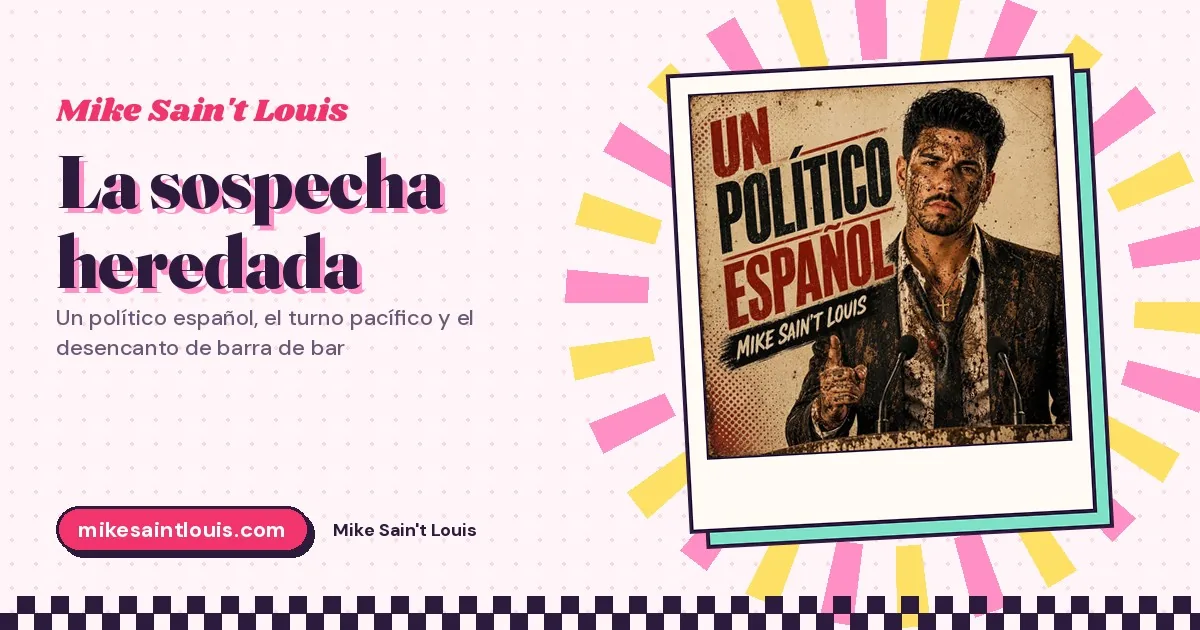
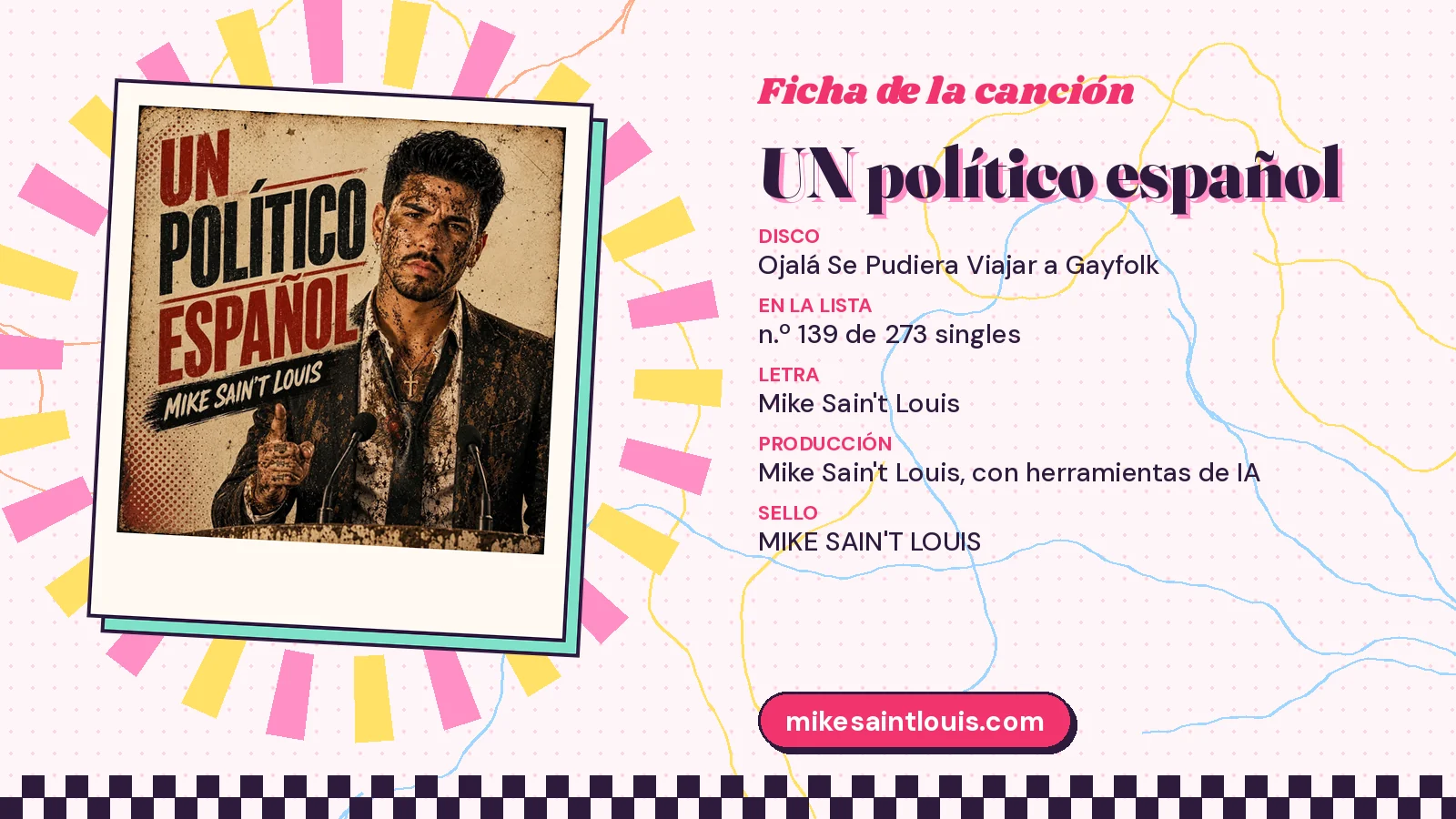
Un político español (A Spanish politician) is that conversation turned into a song. On the song page I talked about the endless wait for an honest one and the mocking reply it gets. Here I want to take another road. I won't talk about parties or names, because the lyrics don't either. I want to talk about distrust as an inheritance: where it comes from, why street Spanish expresses it so wittily and how much historical truth there is in the last verse. The full lyrics are published and take a minute to read.
A satire, not a report
It's worth making this clear from the start. Un político español is a satire. It exaggerates, generalises and allows itself to say things nobody would say in a court of law. It doesn't point at any specific person or any party. It talks about a collective character, the Spanish politician, the same way jokes talk about the father-in-law or the neighbour on the fifth floor.
Political satire has a very long tradition. From Greek comedy to newspaper cartoons and TV comedy shows, there has always been someone laughing at power. And exaggeration is its main tool. Nobody thinks a caricature is a faithful portrait. The nose is bigger so you can see it better.
That's why the song has to be heard for what it is: a tired citizen letting off steam, using the words people use in the street when they've had enough. It isn't an analysis. It's a mood.
Waiting, sitting down
The chorus revolves around waiting. You have to wait and wait for someone honest to vote for to appear. And the reply comes straight away, with one of the most Spanish phrases in the language:
«Pues espera bien sentado»
"Well, wait sitting comfortably." Waiting sitting down is what you tell someone who is waiting for something that's never going to come. If you're going to wait, you'd better get comfortable, because it'll take a while. It's a phrase that mixes practical advice with mockery, and in Spain everyone understands it without explanation.
The lovely thing is that the song stretches it. It's not enough to wait sitting down: you have to wait sitting comfortably. That "comfortably" adds a touch of comic cruelty. Grab a good chair, a cushion, whatever you need. This isn't getting sorted out this afternoon.
The proverbs of pointless waiting
Spanish is full of expressions for waits that lead nowhere. Wait sitting down, wait until frogs grow hair, wait for Saint John to lower his finger. They all say the same thing with different images: what you're waiting for isn't going to happen. English has its own versions, when pigs fly, don't hold your breath.
I love that a language has so many ways of saying something is impossible. It says a lot about a culture used to watching promises get postponed. And politics is probably where those expressions get used most. Whenever someone promises something during a campaign, there's always someone else answering with a waiting proverb.
Un político español leans on those proverbs without quoting them. Its chorus is a variation on the same idea. You have to wait and wait, like someone waiting for frogs to grow hair. And the listener fills in the rest.
The word honest
There's a word in the lyrics that deserves attention: honrado. It doesn't say efficient or competent. It says honrado, which translates as honest but has a lot of history in Spanish. It sounds a bit old-fashioned, a bit like your grandmother, a bit like a trade. An honest worker. A humble, honest family.
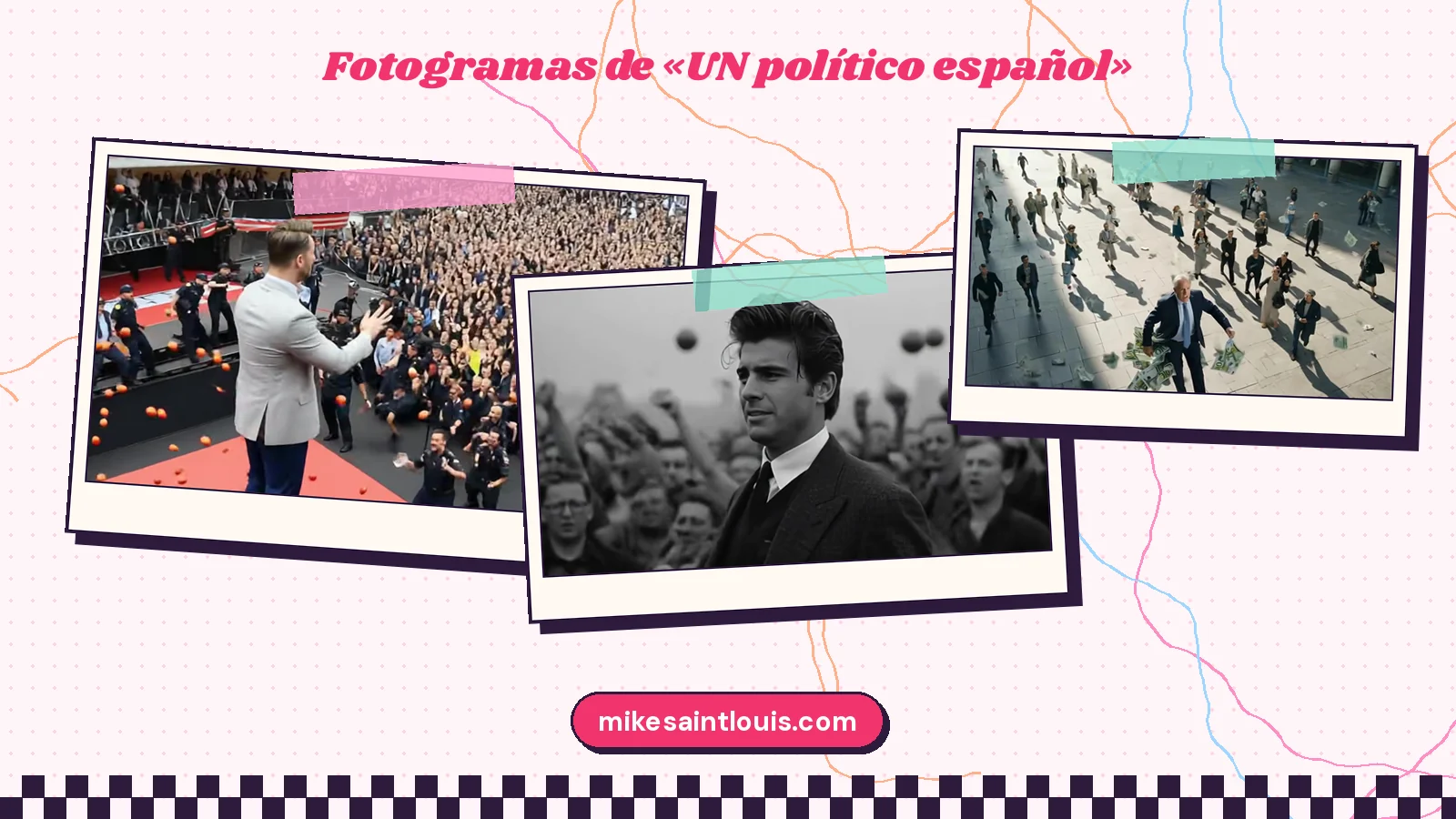
That choice sets the bar very low. The song isn't asking for a dazzling politician or a management genius. It's asking for someone honest, which is the least you'd expect of anyone. And even so, the chorus says you'll have to wait. That's the bitterest part of the joke: nobody's asking for the moon, just the basics, and even that seems hard to find.
I love how a single word can change the tone of a sentence. If the lyrics asked for an exemplary politician, it would sound utopian. Asking for an honest one, it sounds weary.
Bar-counter language
The song doesn't hold back on vocabulary. There's a crude expression used in Madrid to say something gets on your nerves deeply, and the lyrics drop it without asking permission. It's how people talk in the street when they're fed up. No euphemisms, no beating about the bush.
That register is part of the fun. Political complaints in bars aren't made in the language of TV debates. They're made with swearwords, exaggerations and sweeping statements that admit no nuance. The song captures that tone precisely. It doesn't try to sound sophisticated. It tries to sound true.
That language turns up a lot in my lyrics, because it's the language I know and the one that interests me. Street Spanish has a force formal Spanish loses. A good swearword in the right place says more than three paragraphs of argument.
Since the days of the Bourbons
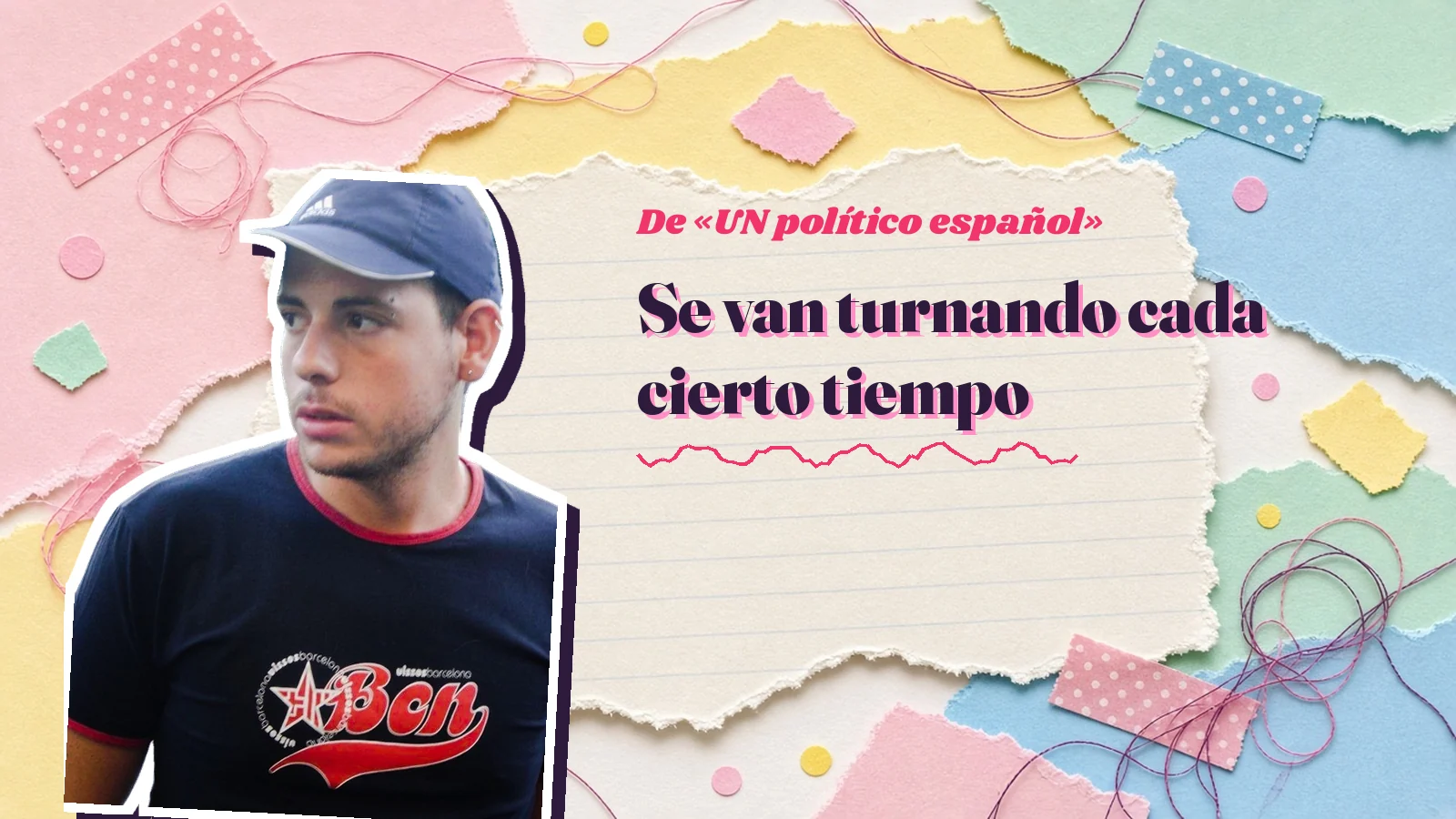
The last verse is what gives the song a historical dimension. It says this goes back a long way, to the days of the Bourbons, and that they take turns every so often:
«Se van turnando cada cierto tiempo»
That line ("they take turns every so often") sounds like a generic complaint, but it has a very specific historical echo. In late nineteenth-century Spain, during the Bourbon Restoration, there was a system history books call the turno pacífico, the peaceful turn. The two big parties of the day, the Conservatives and the Liberals, alternated in government by agreement.
What made that system work was caciquismo, the power of local political bosses, and electoral fraud. Results were fixed in advance, through a practice that entered the language as pucherazo. I don't know whether the lyrics were thinking of that with the word "turns", but the coincidence is too good not to mention.
The pucherazo
Pucherazo is one of those words that prove Spanish has a memory. It refers to rigging election results and, according to the most widespread explanation, comes from pucheros, cooking pots, where ballot papers were supposedly kept or swapped to alter the count.
The word is still alive. Whenever there are suspicions of irregularities in an election, in Spain or anywhere else, someone talks about a pucherazo. A century and a half later, the vocabulary of the Restoration is still in bar conversations.
That survival says a lot about how distrust has been formed. It didn't spring up yesterday. It's an inherited suspicion, passed down from generation to generation along with the words that name it. When the song says this goes back a long way, it connects with that inheritance.
Distrust with survey data
Distrust of the political class doesn't stay in bars. The surveys regularly published by Spain's Centre for Sociological Research usually list politicians and politics among the problems that worry people most. It's a finding that turns up in the news fairly regularly and that hardly anyone greets with surprise any more.
That means the song isn't inventing a minority feeling. It picks up on something many people feel, even if each person expresses it in their own way. Some say it with data, some say it on a talk show and some say it with a chorus repeated like a mantra.
The interesting thing is that this distrust coexists with turnout that, election after election, still mobilises millions of people. People complain and vote. They distrust and vote. And that very human contradiction is part of the portrait too.
They don't represent us
In 2011, squares in many Spanish cities filled with people during the 15M movement. One of the most repeated slogans was "No nos representan", they don't represent us. That phrase summed up a weariness very similar to the one in Un político español, though with a different tone, more organised and more hopeful.
The song doesn't have that collective hope. It's more individual, more of a personal grumble. But it shares the diagnosis: the feeling that those who govern don't resemble those who are governed. That there's a distance, a wall, a separate class.
I find it interesting that the same unease can be expressed in such different ways. In a square, with assemblies and banners. In a bar, with a swearword and an elbow on the counter. And in a song, with a chorus that waits without expecting anything.
Taxes
The last line of the lyrics brings in something very concrete: taxes. It's no longer about honesty in the abstract, but about the money coming out of everyone's pocket. It's the moment the complaint stops being philosophical and becomes domestic.
That shift is very typical of the way I write. The everyday always sneaks in. Heartbreak is measured in supermarket receipts, a face in clinic euros, and politics in the annual tax return. Abstraction doesn't interest me as much as the wallet.
Because in the end, most people's relationship with politics comes down to that. What they pay and what they get in return. When the sums don't add up, distrust grows. The song says it in its own way, with no figures or charts, with the anger of someone looking at their payslip at the end of the month.
Exaggeration as a device
I've said the song exaggerates, and I want to come back to that because I think it matters. The line claiming you have to be a thief to be a politician is obviously hyperbole. Huge numbers of people work in politics honestly, in small town halls, in council departments nobody pays attention to, in jobs nobody applauds.
The satire doesn't deny that. It just isn't concerned with it. Its job is to point out what doesn't work, and to do that it amplifies. Just as a mother-in-law joke doesn't mean all mothers-in-law are terrible, a song about thieving politicians doesn't mean they all are.
What exaggeration does do is put words to the weariness of a lot of people. It's a song for people to recognise themselves in a feeling. And the feeling is real, even if the line is exaggerated.
A collective character
The title is interesting. It doesn't talk about Spanish politicians, plural. It talks about a Spanish politician, singular, as if he were a character. And the way the title is written on streaming platforms, with UN in capitals, reinforces that idea of a generic individual.
That character doesn't exist as a real person. He's an archetype, like the brother-in-law who knows everything or the boss who does nothing. Archetypes are useful in satire because they let you criticise behaviour without attacking anyone in particular. Everyone recognises the character, but nobody can say it's about them.
The characters in my lyrics are almost always invented, and this one is no exception. The Spanish politician in the song is a figure made of a thousand news bulletins, a thousand bar conversations and a thousand proverbs. He has no face, and that's why he can have every face.
A chorus that goes nowhere
Musically, the lyric is almost all chorus. The line about waiting comes round again and again with very few variations. And that structure isn't accidental: it imitates the feeling that nothing changes, that history repeats itself election after election.
It's a way of building meaning through form itself. If the song moved forward, if it told a story with a beginning and an end, it would convey a sense of progress. By circling the same line, it conveys stagnation. The waiting becomes something you hear, not just something you're told.
I love it when a song's structure reinforces what the lyrics say. It's one of the things I take most care over as a lyricist and producer. Sometimes repeating yourself is the best way to say that something doesn't change.
Patience as a national virtue
There's an underlying irony in the chorus that I find very funny. The song presents waiting as absurd, but at the same time it turns it into a kind of virtue. You have to wait and wait. And it says so with a mix of resignation and stubbornness that feels very Spanish to me.
In Spain we know how to wait. We wait in the queue at the doctor's, at the town hall counter, for the bus that never comes and for the insurance company to call us back. Waiting is as much part of daily life as the mid-morning coffee. Maybe that's why a song about waiting for an honest politician sounds so familiar: it's just one more queue.
What sets this wait apart from the others is that nobody knows how long it will last. At the doctor's they give you a number. Here there's no number. There's only a chorus that keeps coming back, like the sign over the counter that never changes.
Laughing so you don't cry
There's a very Spanish expression that sums up the spirit of this song: reírse para no llorar, laughing so you don't cry. Faced with something we can't change, humour is a way of putting up with it. And for many people, politics falls into that category.
That's why political comedy shows are so successful, and why memes about any election debate spread faster than the debates themselves. Laughter doesn't solve anything, but it brings relief. It turns frustration into something you can share. And sharing it is already a way of not being alone with it.
Un político español works like that. It's a collective release in the form of a song. You put it on, you laugh at the bluntness of the lyrics and, for a while, the anger weighs a little less. Nothing more is needed.
A chorus for any parliament
One of the things I like most about this song is that it doesn't go off. Since it names nobody and alludes to no specific scandal, it works at any moment. It could have been written fifty years ago and could be heard fifty years from now without losing its meaning.
That timelessness is an advantage generic satire has over topical satire. Songs mocking a particular politician age along with him. Songs mocking an archetype outlive every particular politician. And the last verse, about a rotation that goes back a long way, reinforces the idea of something repeating itself throughout history.
Other songs with a ballot box
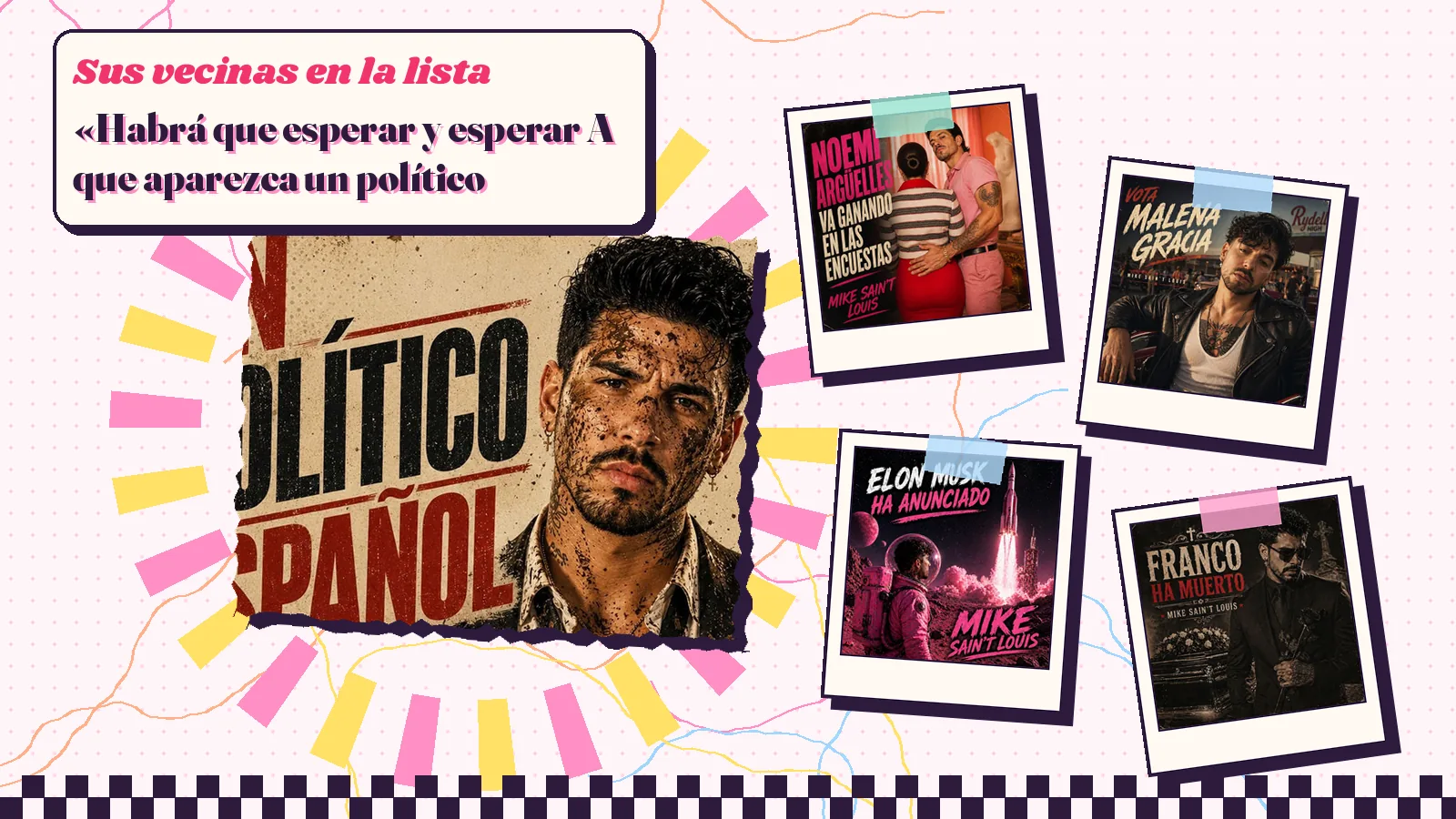
Politics turns up in other corners of the catalogue, almost always with humour. In Noemí Argüelles va ganando en las encuestas (Noemí Argüelles is ahead in the polls) a fictional character tops the polls, an absurd response to a landscape that seems even more absurd. In Vota Malena Gracia (Vote Malena Gracia) there's another imaginary campaign inside the Gayfolk universe.
And in Elon Musk ha anunciado (Elon Musk has announced) tech power enters the scene. They all share a sceptical view of those in charge, but each expresses it in a different tone. Un político español is the most direct of them all, the one that doesn't hide behind any famous figure.
There's also Franco ha muerto (Franco is dead), whose title recalls the words used in 1975 to announce the dictator's death. It's another way of looking at the country's political history, although its lyrics haven't been published yet.
An album for escaping
The song is part of Ojalá se pudiera viajar a Gayfolk (If only you could travel to Gayfolk), an album whose title already expresses a wish to get away. If only there were a better place, a planet where things worked differently. Un político español fits perfectly into that frame: it's the reason you'd want to leave.
Gayfolk is an imaginary planet of freedom and queer art. And facing it, the Earth of news bulletins, taxes and endless waiting. The song is a postcard from the place you want to escape, written with the humour of someone who has lost their patience but not their urge to laugh.
Why keep voting
It might seem that a song like this invites you to stay home on election day. I don't see it that way. Complaint, satire and humour are forms of participation. Whoever laughs at power hasn't given up on politics. They're just demanding more of it.
In fact, the lyrics themselves say so in their own way. You're waiting for someone honest to vote for. In other words, you want to vote. What's missing isn't the will, it's trust. And that difference matters. Distrust isn't indifference. It's a way of keeping a close eye on things.
I like to think a song like this can work as a release and, at the same time, as a reminder. The bar is set at the basics. Asking for honesty isn't asking too much.
Who this song is for
For anyone who has ever sworn at the TV news. For anyone who has argued about politics at a bar counter without reaching any conclusion. For anyone still waiting, sitting comfortably, for someone they'd be glad to vote for.
And for anyone who enjoys direct satire, with no nuance or hedging, that says in street words what many think in silence.
How to listen
The song is on the singles page and on every platform, and you can download it from the downloads section. Play it with the news on in the background and you'll see how it comes to life.
As a lyricist, composer and music producer, I like the catalogue to include pure complaint songs too, the kind written in anger and heard with a smile. The music and the vocals are generated with artificial intelligence, but being fed up, and wanting to laugh about it, is as human as anything I know.
Frequently asked questions
What is Un político español about? It's a satire about distrust of the political class. The chorus repeats that you'll have to wait for an honest politician to vote for to appear, and the last verse says they've been taking turns for a long time and mentions taxes.
Is it about a specific politician or party? No. The lyrics don't name any person or any party. The Spanish politician of the title is a collective character, and the song works as a caricature, with the exaggeration typical of satire.
What was the "peaceful turn"? It was the system of the Bourbon Restoration in late nineteenth-century Spain, in which the Conservative and Liberal parties alternated in government by agreement, relying on local political bosses and the electoral fraud known as pucherazo.
Who makes this song? Mike Sain't Louis, a lyricist, composer and music producer who calls himself "the first AI songwriter": he writes the lyrics and directs the production, and the music and vocals are generated with artificial intelligence.