
By Mike Sain't Louis ·
«I left your scent on the door frame»: the five senses in my lyrics
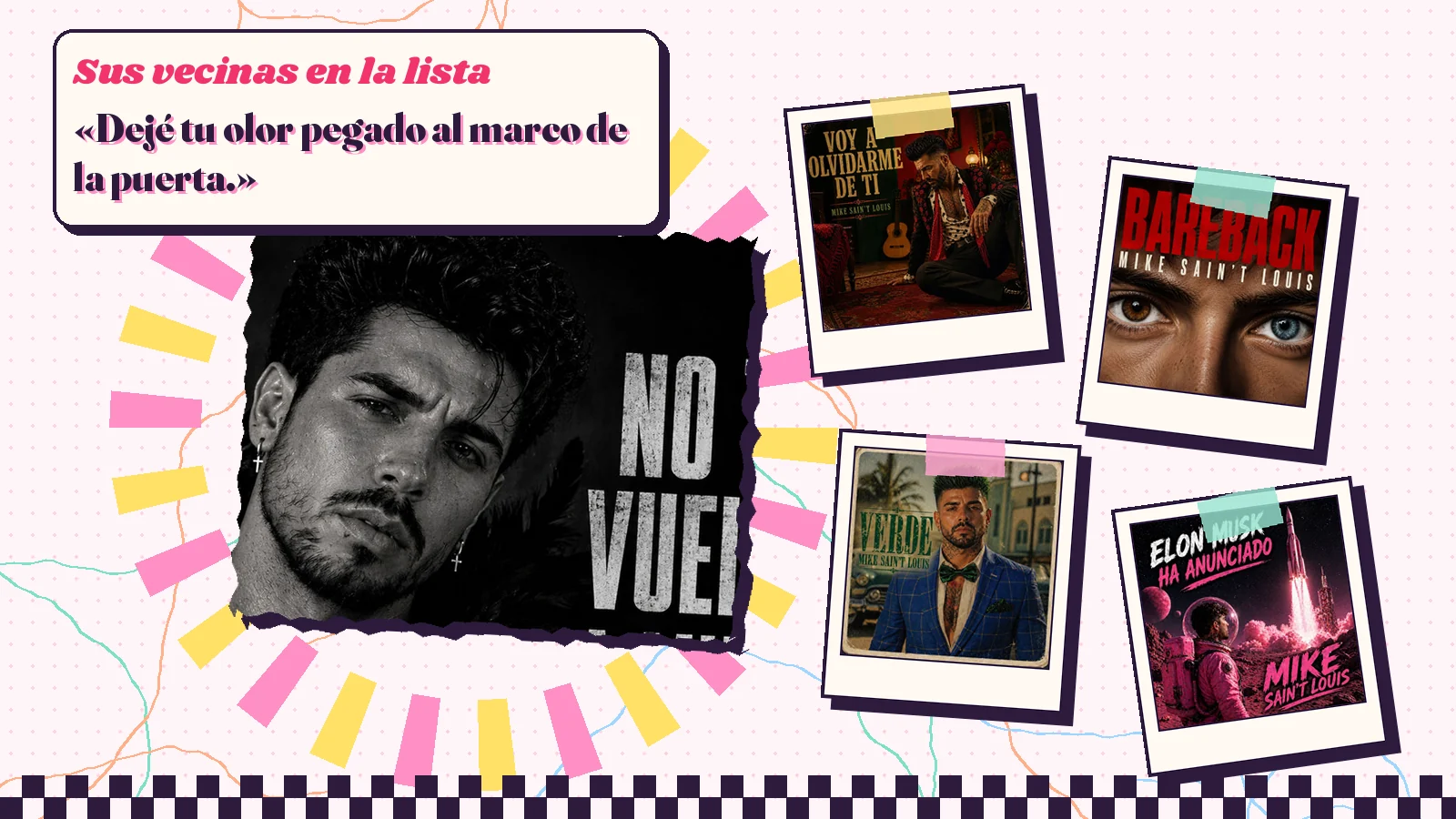
«Dejé tu olor pegado al marco de la puerta.»
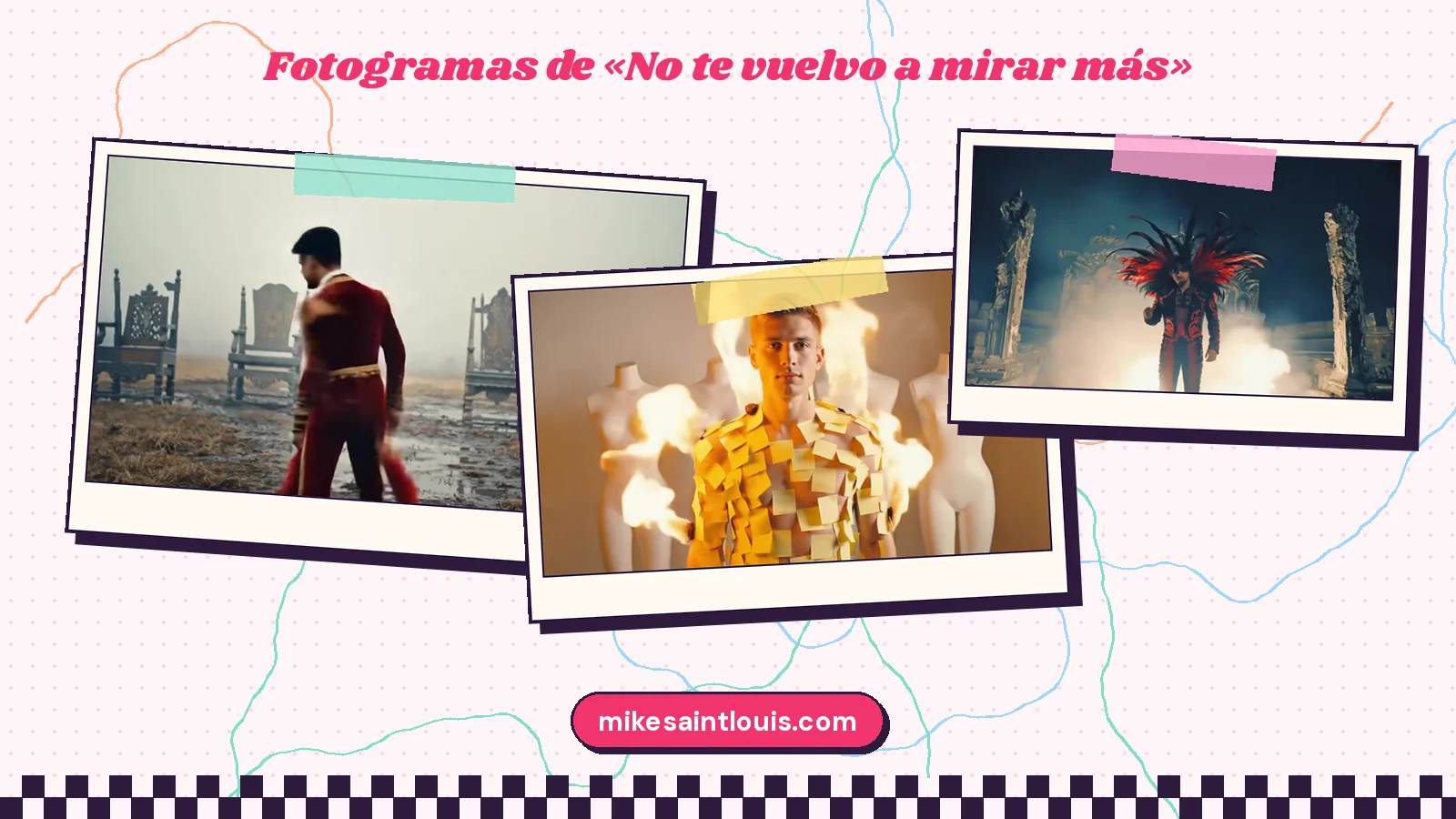
I left your scent stuck to the door frame. It's a line from «No te vuelvo a mirar más», single number 90 in my catalogue, released in June 2026 on the album «Ojalá se pudiera viajar a Gayfolk». (The full lyric is on gayfolkplanet.com.) The song is about someone walking out of a place where they've been treated badly, and instead of saying «I left», or «I forgot you», or «I don't love you any more», it says this: that a smell stayed behind, clinging to the wood.
Nobody leaves a smell anywhere on purpose. It stays on its own. That's why the line works. It isn't talking about a decision; it's talking about a remainder. About what's left over when someone goes. And it does it through the nose, the sense songs remember least.
That's what this piece is about. The five senses in my lyrics. The smells, the tastes, the skin, the ear and the gaze that turn up in my songs, and why I trust a detail you can smell or touch more than a big word like «pain» or «love».
The ladder of the senses
Ever since Aristotle, Western tradition has lined the senses up in a row. At the top, sight and hearing, considered the noblest because they work at a distance: you can see a mountain without touching it and hear a bell without walking over. At the bottom, smell, taste and touch, which need closeness, which get inside the body, which have something animal about them. For centuries, serious art was thought to belong to the eyes and the ears. Painting and music, yes. Cooking and perfume, not so much.
That ranking has always struck me as suspicious. Because what I remember most about the moments that matter usually isn't what I saw, but things much lower down the ladder. A smell on a stairwell. The texture of a blanket. The taste of something eaten without appetite on the day of bad news. I think it's the same for almost everyone.
And I think popular songs have always known it. The copla, the bolero, the heartbreak ballad of a lifetime ago are all full of things you can touch: handkerchiefs, letters, pillows, glasses, perfumes. Folk, the family I like to place my songs in, works with concrete objects and bodily sensations, not with concepts. A lyric that says «I'm sad» tells nobody anything. A lyric that tells you where a smell got left behind tells the listener a whole story.
A scent stuck to the door
Back to the door frame, because that line has more layers than it seems.
A door frame is the exact point between inside and outside. It isn't the house and it isn't the street. It's the threshold. And the smell stays right there, on the last thing the person touched on the way out. The image is almost physical: someone leans on the frame for a second, maybe to catch their breath, maybe to glance back, and then they're gone. What's left in the wood is their trace.
Notice that the line doesn't say «your smell stayed on me». It says the opposite. It's the narrator who leaves their scent in the other person's house. And that flips the usual break-up song, where the one left behind sniffs the clothes of the one who walked out. Here the one leaving knows something of theirs stays behind, and doesn't care. They're never coming back to collect it.
The song rounds the idea off a little later, when the narrator closes the door slowly so as not to be tempted to turn around. It's a quiet exit. No slammed door. And the scent on the frame is the signature on that exit: the only thing left of someone who has decided never to look again.
I love that such an unglamorous sense gets to carry the weight of a goodbye. Smell explains nothing. It gives no reasons. It's simply there, or it isn't. And in a break-up, sometimes, that's all there is.
Hands that smell of what you never washed
The same song has another smell, and this one is far less kind.
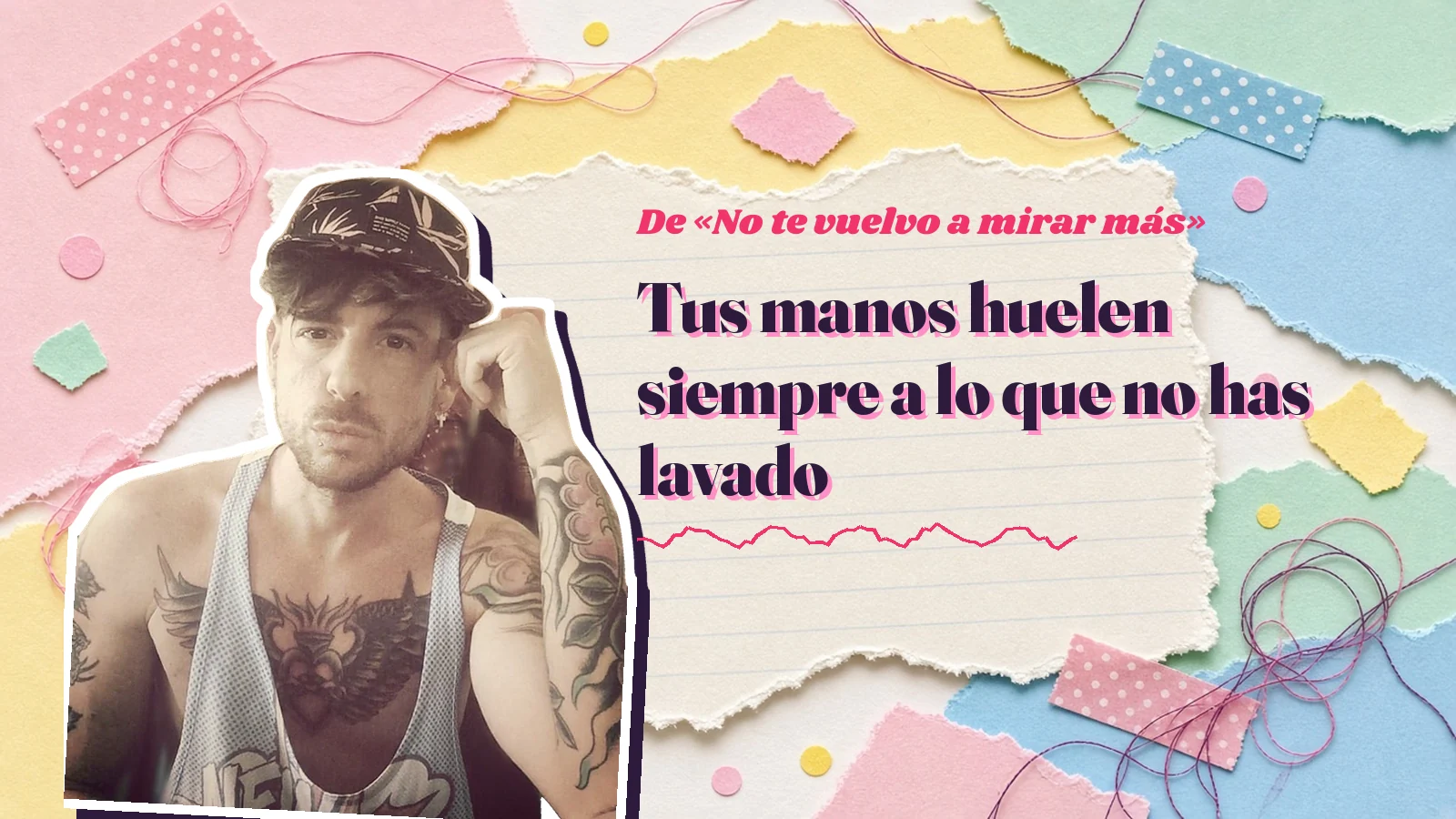
«Tus manos huelen siempre a lo que no has lavado», says the second verse: your hands always smell of what you haven't washed. Just before it comes another image of cleaning: «el barro del suelo no se quita con trapos», the mud on the floor won't come off with a rag. Together the two lines make a small portrait of moral dirt. The other person has done things that can't be scrubbed away, and the body gives them up. They can dress up as the good guy, they can cry in front of people who don't know the story, but their hands smell.
Spanish has an old bond between smell and suspicion. We say something «me huele mal», it smells bad to me, when we don't trust it. We say «esto huele a chamusquina», this smells of scorching, when we sense trouble coming. We say someone «se huele algo», smells something, when they start to suspect. In our language the nose is a lie detector. And the song uses exactly that: smell as proof that the other person's story doesn't add up.
It's an ancient image, too. Anyone who has read or seen «Macbeth» remembers Lady Macbeth rubbing her hands in her sleep, trying to get rid of a bloodstain that's no longer there, complaining that it still smells. All the perfumes of Arabia, says Shakespeare, will not sweeten this little hand. Guilt as something that sticks to the skin and that the nose won't let you forget.
In «No te vuelvo a mirar más» there's no blood, only mud and rubbish. It's a more domestic guilt, an office guilt. But the mechanism is the same. What's been done wrong leaves a smell.
Smell goes straight to memory
There's a reason smells weigh so much in heartbreak songs, and the reason isn't only poetic. It has to do with how the brain works.
Smell information arrives at a region called the olfactory bulb, which is wired very directly to the structures that handle emotion and memory, such as the amygdala and the hippocampus. The other senses take a longer detour before they get there. That's why a smell can drop you back into a specific moment before you've had time to think about it. You don't remember it: you suddenly find yourself standing inside the memory.
In «Voy a olvidarme de ti» the chorus keeps coming back to the smell of a pillow. I've written about that song elsewhere, so here I'll just note what concerns the senses: the promise to forget runs straight into a smell that's still there. The head can make decisions. The nose doesn't take orders.
Patrick Süskind built a whole novel, «Perfume», published in 1985, on the idea that scent is the most intimate thing a person has, what makes them unique and what no one can copy. It's a dark book, but the intuition underneath strikes me as very true. When a song wants to say that someone really was in your life, that they weren't a hologram or a fantasy, smell is the most convincing evidence there is.
Breath you can smell from here
Not every smell in my lyrics is tragic. Some are pure comedy.
In «Bareback» there's a moment of brutal comedy where the narrator, after listing everything they didn't like about a hook-up, finally reaches the other guy's mouth. First the missing teeth, the cavities, a comparison with Carrie's mouth. Then the punchline: «Dios. ¡Pero si huele hasta aquí!», God, you can smell it from here. And the confirmation, in case anyone missed it: «Es tu aliento el que apesta», it's your breath that stinks.
That's another tradition, the olfactory insult, and in Spanish it's a rich one. The guy who smells like a tiger. The breath that could knock you flat. The one reeking of cheap cologne. Smell as a way of knocking someone off their pedestal in one blow. In a comic heartbreak song, after all that anger, having the final problem be something as physical and inelegant as bad breath works like a pin in a balloon.
I'm drawn to that double life of smell in my songs. Sometimes it's the most intimate thing, what stays on the door frame. Other times it's the most ridiculous, what reaches you from the far end of the sofa. Both are true at once, because love and disgust live very close together. What makes you fall for someone is, often enough, the very thing you later can't stand.
The perfume in the square
There's one song of mine where smell means a party.
«Verde», from the album «El día de la liberación», is a rumba about marijuana. It opens with an obvious wink at Federico García Lorca, at that «verde que te quiero verde», green, how I love you green, from the «Romance sonámbulo» in his «Romancero gitano» of 1928. And halfway through comes a line that changes the sense in play: the square fills with a special perfume, and that's the signal for the celebrating to begin.
Here smell isn't a trace or a suspicion. It's a summons. Like the smell of churros at a street fair, gunpowder at the Fallas or incense at a procession, it's a signal that arrives before the music: something's happening, come closer. At Spanish fiestas the nose usually gets there first. Before you see the lights, you already know the fair is on.
The same song plays with taste. It says that, of all the colours, green is the one that «me sabe animar», a phrase that tastes of cheering up, and it asks for life with a pinch of charm and another of salt. Salt as wit, as «salero», is one of those very Spanish expressions you barely notice. We say someone has «salero», that a person is «salada», salty, meaning lively and funny, that something is «soso», bland. In our language, taste also describes character.
What my songs taste of
If smell is the sense of memory, taste is the sense of routine. What we eat and drink every day says a lot about how we're doing.
In «Elon Musk ha anunciado» there's a bitter coffee, and the same image comes back in «No quiero otro novio cojín». Two words are enough to paint a morning. There's no need to say the narrator is sad, or tired, or alone. The bitter coffee says it. It's a taste everyone knows, the coffee you drink out of duty, without sugar or without the will to look for it, staring at the wall.
In «Karma» taste becomes an insult with a Canarian accent. The narrator tells the other guy, half furious and half joking, to do what he likes with himself, dip it in mojo or, better still, in gofio, whichever he prefers. Gofio is the toasted-grain flour that's been eaten in the Canary Islands for centuries, and mojo is the islands' sauce, red or green. Putting those two foods into a heartbreak song gives the reproach a place and a landscape. It's no longer any old ex: it's an ex with an address in El Médano.
And in «Tengo argumento» taste becomes a riddle. The repeated line, «sabe a María», it tastes like María, plays on a biscuit everyone in Spain has dunked in their breakfast milk at some point, and on the double meaning the song builds around it. A flavour so ordinary it turns into a code.
There's a fact about taste I love. For a long time people spoke of four basic tastes: sweet, salty, sour and bitter. In 1908 a Japanese chemist, Kikunae Ikeda, proposed a fifth, umami, the savoury depth of broth and of certain foods rich in glutamate. It took decades to be fully accepted. I think it's a good lesson for anyone who writes: there's always a nuance that doesn't have a name yet, and sometimes a song's job is to find it.
Skin as a screen
Touch is the largest sense we have. Skin covers the whole body, and it's both border and contact. In my lyrics it turns up in two very different ways.
The first is skin as a surface where light falls. In «Gaslighting», when the narrator gets their confidence back after a relationship in which they were made to doubt their own memory, they say the lights are dancing on their skin. In «Dark Corners» there's shine on the skin alongside broken tears. Skin here is almost a nightclub screen: the place where the world gets projected. And in both songs the image is tied to the dance floor, to the moment the body belongs to you again.
It matters to me that it's the skin and not the face. A face can be faked. A smile, a look, an expression can all be controlled. Skin, not so much. It bristles, it flushes, it comes up in goosebumps. When a song wants to say someone is truly fine, that it isn't a pose, saying the light dances on them is more convincing than saying they smile.
The trembling hands
The second way touch appears is the most painful: the contact that's missing, or the contact the other person refuses to notice.
In «Tu mendigo» there's a line I count among the hardest in the catalogue. The other person looked after the company, but not after the trembling of the narrator's hands. And right after, an image of cold: the other person said the cold was down to the sun, not to the shivers. In other words, whatever the narrator's body was saying, the other put it down to the weather. To anything except himself.
It's a very recognisable mechanism in relationships where someone doesn't see you. Your body sends signals, it shakes, it goes cold, it shrinks, and the other person always has an outside explanation. You're tired, it's cold, it's the sun, it's your temperament. Touch, the most direct sense of all, gets denied.
In the fifties the psychologist Harry Harlow ran experiments on infant monkeys, now heavily criticised for their cruelty, that still get quoted whenever touch comes up. The infants could choose between a wire figure that gave them milk and a figure covered in soft cloth that gave them nothing. They spent almost all their time clinging to the cloth one. The conclusion drawn at the time was that contact, physical comfort, isn't a whim but a need as basic as food. I think of that when I read songs like «Tu mendigo»: what's missing isn't affection in the abstract. It's someone who notices you're trembling.
In «Esperma», too, touch appears through its absence, in a goodbye that denies itself the last kiss and the last hug. And in «Me rindo» it appears the other way round, as what saves you: someone who has understood you and held you. In my songs, the hug is usually the border between a relationship that hurts and one that doesn't.
Cold, heat and what the doctor says
Cold and heat are touch too, and in my lyrics they do very different jobs.
In «Ojete Calor en versión low cost» cold is a medical excuse. The narrator turns up at A&E with a decidedly unpoetic problem, the doctor says he must have caught a chill, and the narrator confesses to the listener that he lied: it wasn't the cold. What follows is the truth, which I won't repeat here, because it's the joke of the song. The cold works as the socially acceptable lie, the explanation everyone accepts so nobody has to talk about the awkward part. The title, by the way, plays on Ojete Calor, the musical comedy duo, and presents itself as a bargain-bin version of their style.
But the same sense can go somewhere much more serious. In «Entre cuatro paredes» one line says he can't feel the warmth of any love. The whole song is a portrait of the kind of sadness that shuts you in a room: no wish to go out, no strength, no motivation, and the sadness feels like eternity. Here the cold is no joke. It's the absence of contact, of company, of anything that warms.
I want to pause on this, because sad songs can keep you company, but they can't replace help. If the room in that song looks too much like yours, if you've gone a long time without wanting anything or you're having thoughts of not wanting to go on, talk to someone. In Spain you can call 024, the suicide crisis line, which is free, confidential and open around the clock. If there's immediate danger, call 112. If you're outside Spain, call your local emergency number. Asking for help is a way of looking after yourself, not a weakness.
Hearing, the sense that never closes
Eyes have lids. Ears don't. It's one of those things we never think about until someone points it out, and then it can't be unthought. You can stop looking at something, but you can't stop hearing it. That's why noise is one of the oldest ways to torment someone, and silence one of the oldest ways to punish them.
In «No te vuelvo a mirar más» the two face off from the very start. «Me pediste silencio y gritaste hasta el techo», says the song in its second line: you asked me for silence and shouted the roof down. It's a hypocrisy you can hear: the other person demands quiet while he yells. And the end of the song returns to the same ground, with a narrator who no longer answers however much the other keeps shouting. Hearing, here, is a battlefield. Who stays quiet and who shouts decides who's in charge.
In other songs hearing is tenderer, or funnier. In «Canguros» the narrator hears the sound of the sea again just as he has to leave, and can't say goodbye. The sea as what calls you from outside. In «Discutiendo con la IA» the argument happens while Locomía plays in the background, the band with the giant fans from the late eighties. In «Ese chulito» the boy of the title drives around listening to Melendi. In «El concierto de Ismael Serrano» the narrator ends up alone listening to «Caperucita», one of the Madrid musician's best-known songs.
What gets listened to defines the characters. A boy who puts Melendi on in the car is not the same as one who puts on Locomía while he argues with a machine. The music playing inside my songs works like clothing in a novel: a small detail that tells you which neighbourhood someone's from, which generation, which mood.
Look me in the eyes
I've left sight for last because, prestigious as it is, in my songs it often appears in order to refuse itself.

The very title of the single anchoring this piece is a visual renunciation, and I've already devoted another piece to that gaze as a last form of power, so I'll be quick here: I'm never looking at you again. It doesn't say «I'll never speak to you again», or «I'll never see you again», which is something that can happen by accident. It says look, which is deliberate. Ceasing to look at someone is the most radical way of ceasing to give them importance. And in a relationship with someone who needs to be looked at all the time, who needs an audience, it's also the punishment that hurts most.
In «Canguros» the gaze appears as a test of sincerity, and fails it: look me in the eyes, says the narrator, and straight after, I don't believe you. In «Carta de recomendación» the gaze is an outright con, because the other guy's blue eyes turn out to be coloured contact lenses. And in «Me mola Zeus» sight is how you catch someone contradicting themselves: you told me you hated drama, but I saw you crying.
It's curious. The sense tradition held to be noblest, most rational, the one that brings knowledge, is in my lyrics the most deceptive. Eyes can be painted, fitted with lenses, can lie while looking straight at you. The nose and the skin lie less.
When the senses cross
There's a phenomenon called synaesthesia, which for some people is literal: they see colours when they hear sounds, or taste flavours when they read words. In literature it's used as a figure of speech, and it has a long history.
In «Les Fleurs du mal», in 1857, Charles Baudelaire wrote a sonnet called «Correspondances» in which perfumes, colours and sounds answer one another. Not long after, Arthur Rimbaud gave each vowel a colour in his poem «Voyelles». All of modern poetry is full of those crossings: silences that weigh, colours that ring, words with a taste.
My songs have a few crossings of that kind, though rarely so explicit. In «El abismo en mi cabeza» there's a cold silence, a sound described by touch. In «Antisocial» silence is a castle, something you can touch and live in. In «Verde» green «tastes» of cheering up, mixing a colour with a flavour. They're small shifts, but they turn a sentence from information into sensation.
I think that's what happens with the best popular speech. When a grandmother says someone has «mala leche», sour milk, meaning a nasty temper, or that a day is «de color de rosa», rose-coloured, or that a person is «un trozo de pan», a piece of bread, meaning kind to the core, she's doing synaesthesia without knowing it. She mixes the senses to talk about what has no name. And that's the language my lyrics drink from.
Writing with things you can touch
If I had to draw one practical idea from all this, for anyone who wants to write songs, it would be this: write with things that can be smelled, touched or tasted.
Abstract words are comfortable, but they don't land. Sadness, loneliness, resentment, nostalgia: all true, and none of them does anything to the listener. Whereas a bitter coffee, a pillow that smells, a door closed slowly, hands that tremble and that nobody looks at: those get in. They get in by the same road real memories take.
My songs are made with artificial intelligence: the music and everything you hear come out of AI tools, and what I bring is the lyrics, the composition and the production. People sometimes ask what a human adds to that process. One of the most honest answers I have is this. A machine can generate sound, but it doesn't know what a stairwell smells like on a Sunday, or how it feels in the body when someone isn't listening to you. That's what the writer brings, from what they've lived or seen others live.
That's why I love that line about the scent on the door frame so much. It's small, it's concrete, and nobody explains it. But anyone who has ever walked out of a place where they weren't loved well knows exactly what that door smells like.
Frequently asked questions
In which Mike Sain't Louis songs do the senses appear? Among others, «No te vuelvo a mirar más» (the scent on the door frame and the hands that smell), «Voy a olvidarme de ti» (the smell of the pillow), «Bareback» (the breath), «Verde» (the perfume in the square), «Karma» (gofio and mojo), «Gaslighting» (the lights on the skin), «Tu mendigo» (the trembling hands) and «Canguros» (the sound of the sea).
Why use smells and tastes in a lyric? Because they're concrete details that go straight to memory and emotion. A smell or a taste tells a story without having to explain it, far better than an abstract word like «sadness».
What is synaesthesia in a song? It's mixing senses within a single image, like talking about a «cold silence» or a colour that «tastes» of something. Baudelaire and Rimbaud made it a central device of modern poetry.
Who writes these songs? Mike Sain't Louis, a lyricist, composer and music producer from Madrid who presents himself as the first AI songwriter. The music and vocals of his songs are made with artificial intelligence.
Where can I get help if I feel like the song «Entre cuatro paredes»? In Spain, call 024, the suicide crisis line, free and available 24 hours a day. In immediate danger, call 112. If you're outside Spain, call your local emergency number.