
By Mike Sain't Louis ·
“Everyone’s a world of their own”: when not judging leaves you defenceless
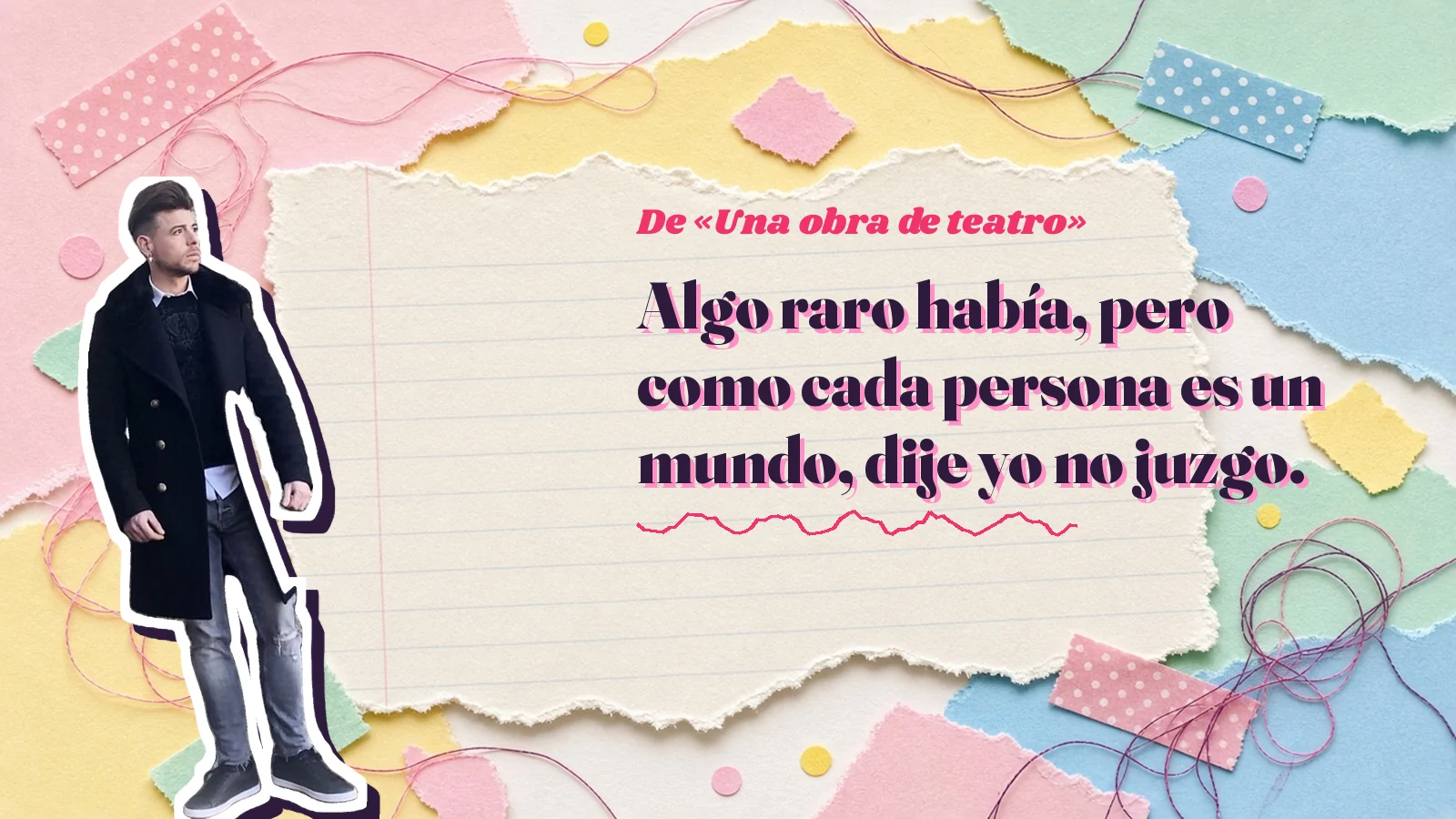
“Something was off, but since everyone’s a world of their own, I said I don’t judge.”
If I had to choose the saddest line I’ve written without using a single sad word, it would be this one. There are no tears in it, no slammed doors, no insults. There’s a common-sense phrase, the kind you hear over coffee after Sunday lunch, and a decision that looks like a good one. I don’t judge.
And yet in «Una obra de teatro» (“A Play”), that decision is the gap through which everything else slips in. The seven-year run. The fake tears. The madman’s role handed to whoever is left without a script.
The song’s page on the blog already tells the heart of the story. In this post I want to talk about something else: that virtue so typical of us, of the community, of people who have been judged a great deal, which is not judging others. And about what happens when someone uses it as a back door.
People who have been judged
There’s a reason why so many gay men, so many trans women, so many lesbians, so many odd people in general keep “I don’t judge” close at hand. We were the ones being judged. A lot. At school, at home, at work, in the queue at the doctor’s. For being camp, for our clothes, for who we went to bed with.
When you’ve grown up with that gaze on you, you learn not to turn it on anyone else. It’s almost an ethic of survival. If I needed not to be judged, I won’t judge either. Everyone’s a world of their own. Each to their own. Live and let live.
I think it’s a beautiful attitude and I stand up for it. It lets you love people very different from yourself.
But it has a crack in it.
A phrase from the dinner table
Before going on, I want to dwell on the phrase itself, because it has a history.
“Everyone’s a world of their own” is one of those phrases people in Spain say without thinking, like “it is what it is” or “we’ll see”. It’s used to close arguments, to stay out of other people’s business, to leave the odd neighbour in peace. Your aunt says it when you tell her your cousin has moved into a van. The hairdresser says it when someone asks for an impossible colour. It’s a phrase of social peace. A truce in a handful of words.
That’s why I was so keen to put it into a break-up song. Because it’s a phrase we’ve all said with good intentions, and in this story it becomes the key that opens the door to deceit. The phrase doesn’t need to be bad to do harm. It just has to be said at the wrong moment, in front of the wrong person.
I love writing with phrases like that, the ones nobody owns. Phrases the listener has said a thousand times and which, heard suddenly inside a song, make them think: I said that too. I looked the other way with these very words in my mouth.
The crack
The crack is that “I don’t judge” can’t tell the difference between what is different and what is harmful.

If your partner has a strange thing about socks, not judging is right. If your partner feels things in a way that isn’t yours, not judging is right. If your partner hardly ever cries, and when he does it looks like acting, and that gives you a little shiver you can’t explain, then “I don’t judge” can become a trap.
Because then it isn’t about judging someone for being different. It’s about listening to your own perception. And people who have been judged a lot sometimes confuse the two. So as not to seem intolerant, they refuse to see. So as not to be like those who hurt them, they let slide signals anyone else would have noticed.
That’s what happens to the song’s narrator. He saw something odd. He noticed it. And he told himself it wasn’t his place to have an opinion. Seven years later, he understands that what he saw was true.
That’s why he didn’t cry
The line most repeated in the lyric is a conclusion: that’s why he didn’t cry.
I love how that “that’s why” works. It’s the phrase of someone who has just understood something. The detective putting the pieces together at the end of the film. That’s why. Now it all fits. What used to be an oddity is now evidence.
And what I find most painful is that the oddity was there the whole time, in plain sight. The narrator didn’t stumble on it suddenly: he saw it, set it aside and put it away in the drawer marked “everyone’s a world of their own”. Only when the play is dismantled does he take the oddity out of the drawer and look at it again. And this time he sees it.
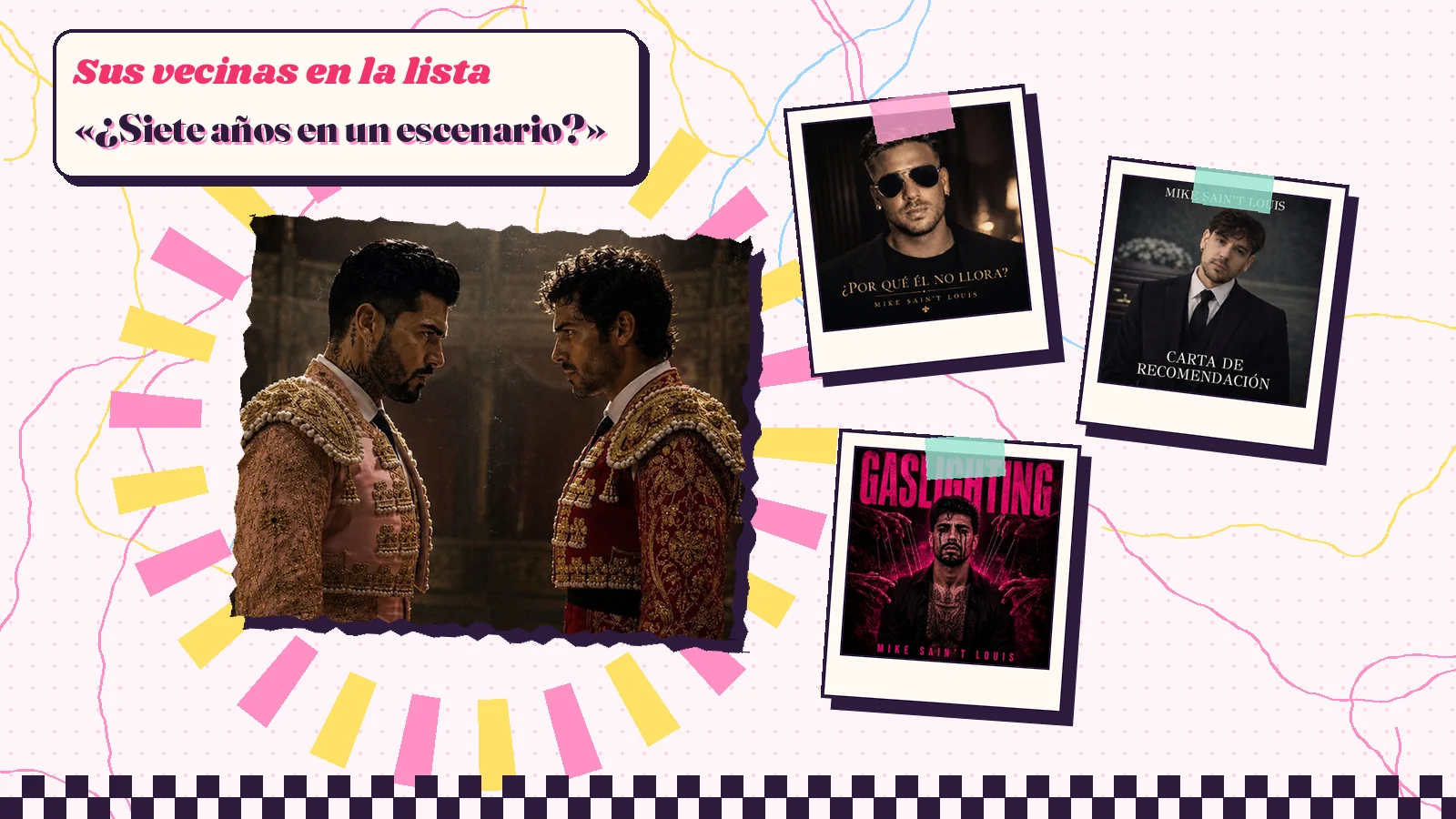
One of my songs asks the same thing from another angle, «¿Por qué él no llora?» (“Why Doesn’t He Cry?”). There the question stays open. Here the song already has the answer, and the answer is no comfort.
Prop tears
Telenovelas have taught me a lot about fake crying.
In afternoon soaps there’s a kind of tear we all recognise: the villainess’s. It falls at exactly the right moment, not a second early or late, with the camera in close. It’s dabbed with a lace handkerchief and leaves the mascara intact. A tear with a function, not with pain. And audiences who have watched soaps for decades spot it straight away.
In real life it’s harder. Because in real life there are no violins to warn you, no close-up, no supporting character glancing at the camera with a suspicious look. In real life, whoever fakes the tears does it in your living room, under the usual light, and you have no reason to think you’re on a set.
What there sometimes is, though, is what the narrator notices: something off. A tear that’s a little too punctual. Crying that stops dead when the phone rings. Sadness that appears precisely when it’s needed to win an argument. It isn’t proof. But it’s a clue. And the song, looking back, turns all those clues into a single line: the few times he did cry, he was faking it.
There’s something camp about that image, even if the song doesn’t treat it with humour. Melodrama crammed into an ordinary flat. Soap-opera tears in a couple from the neighbourhood. If it didn’t hurt so much, it would be a sketch.
The audience applauded
A play needs an audience. And the one in this song had one.
It isn’t in the lyric, but you can infer it from that line about the madman everyone should watch out for. If the narrator ends up as the madman, it’s because people saw the show and believed it. Friends, family, colleagues. People who saw a normal couple, a charming man, someone who maybe didn’t cry much but seemed stable. And who, when the narrator starts to tell what happened, look at him blankly.
That hurts almost as much as the rest. Because you haven’t only lost a partner: you’ve lost your witnesses. Nobody else saw what you saw. And if they did, they preferred not to judge, just as you did for seven years.
I should say that not every audience is like that. Some friends, when you tell them something like this, say: “I noticed it too.” And those words are an enormous relief. They give you your sanity back. They confirm the shiver was real. If you have a friend like that, look after them. And if you’re the one who noticed something about a friend’s partner, perhaps, carefully, one day you can tell them.
The theatre as an exact metaphor
I’ve used theatre many times in my lyrics to talk about relationships. Acts, performances, stages, applause. In «Carta de recomendación» the narrator talks about act one and act two. Here the metaphor reaches its extreme: the whole relationship was a play.
What I like about theatre as a metaphor is that it’s exact about one detail other metaphors miss. In the theatre, the audience knows it’s theatre. They’ve bought a ticket. They know the actor crying on stage isn’t really crying, and they applaud precisely because of it.
In a relationship with someone who fakes it, on the other hand, you’re an audience without knowing it. You never bought a ticket. You don’t know you’re in the stalls. You think you’re at home, in your life, in a real story. And when you realise you were in a theatre, the first thing you feel is shame: for not having noticed, for having applauded, for having been moved by prop tears.
“Seven years on a stage?” The song’s question carries disbelief, and beneath it, that shame.
It isn’t the audience’s fault
I want to say something clearly, because shame is a poor adviser: it isn’t the audience’s fault.
When someone fakes well, when someone has rehearsed for years how to seem what they’re not, it’s no surprise nobody notices. It isn’t a question of intelligence or naivety. Trusting the people you love is normal. It’s healthy. The odd thing would be to live with a magnifying glass over your partner, hunting for contradictions in every gesture.
The song’s narrator wasn’t stupid for not judging. He was generous. And generosity, in the hands of someone who knows how to use it, becomes a tool for the other person. That says a lot about the one using it, not the one giving it.
I think it’s important to say so because many people who leave relationships like this spend years blaming themselves for not seeing it sooner. I’d rather they blamed themselves less and learned more. The lesson isn’t “judge everyone”. The lesson is “listen to your shiver”.
The shiver
That, for me, is the core of the song. The shiver.
“Something was off.” It doesn’t say what. It doesn’t explain. It’s a feeling, something that doesn’t fit, a detail that grates. The few times he cried, something didn’t add up. There was no proof, no message found on a phone, no confession. There was an intuition.
Intuitions get a bad press. They seem like something for witches, or for people who don’t reason. But often they’re information the body processes before the mind does. A tone of voice that doesn’t match what’s being said. A face that doesn’t go with the emotion. A tear that falls right on cue, as if someone had given the signal from the lighting box.
I’m not saying you should always trust your intuitions. I’m saying you shouldn’t bury them under a pretty phrase. If something grates, at least look at it. Ask. Talk to someone outside. Then decide. But don’t tell yourself “I don’t judge” so you don’t have to look.
The madman everyone should watch out for
There’s a line in the lyric I find among the hardest: the narrator feels trapped, and sees himself as the madman everyone should watch out for.
That’s the play’s last twist. When the curtain falls, the one who looks mad isn’t the actor. It’s the audience member who stood up to protest. Whoever says “this was a lie” looks unhinged, because everyone saw the show and everyone found it convincing.
That has a name that has become fashionable, and that I use in several songs: gaslighting. Making the other person doubt their own perception. Making them seem the strange one, the exaggerator, the unstable one. In «Gaslighting» I tell it in another form and another tone. Here it appears as the final consequence of a long run: after seven years of theatre, the one telling the truth has to explain himself.
“How am I, on top of everything, supposed to explain this torment?” That “on top of everything” is everything. On top of living it, on top of finding out, I’m the one who has to convince everyone else. It’s exhausting. And it’s very real.
I even feel sorry
Near the end of the lyric there’s a stretch that surprises me every time I reread it, because it isn’t what you’d expect from a break-up song.
The narrator admits he even feels sorry for having wanted to help him.
Not hatred. Not rage. Sorrow. For the other person and for himself. Sorrow at having poured so much energy into saving someone who didn’t want to be saved, or couldn’t be. That sorrow is the narrator’s last act of generosity, and also the last trap. Because pity can be one more reason to stay. “Poor thing, deep down he’s suffering.” “Poor thing, he doesn’t know any better.”
The song doesn’t stop there. What comes next is dry, administrative: it’s confirmed, it’s settled, there’s no fixing him. Office words, case-closed words. And then, at last, the only line in the whole lyric that looks forward.
At least save yourself
“At least save yourself.”
The song’s page on the blog already discusses this line, and I don’t want to repeat what’s there. I only want to add one thing from this post’s angle.
That line is the opposite of “I don’t judge”. At the start of the song, the narrator refused to draw conclusions about the other man. At the end, he draws the most important conclusion of all: about himself. It’s no longer about understanding the other, giving him the benefit of the doubt, respecting his world. It’s about saving himself.
And to save yourself you have to judge. Not the other as a person, but the situation. You have to say: this hurts me, this has no solution, I’m leaving. That’s a judgement. And it’s the healthiest judgement you can make.
At least save yourself. Judge just enough to be able to leave.
Trusting your eyes again
The hardest thing after a play like that isn’t forgetting the actor. It’s learning to trust your own eyes again.

If for seven years you’ve told yourself the odd thing wasn’t odd, if you’ve buried intuitions under pretty phrases, if in the end you were made to feel like the madman of the story, it’s natural for your perception to be shaken. You see something and don’t know if it’s real or if you’re exaggerating. You notice something and you’re afraid to say it, in case they look at you as if you’re unhinged again.
I have no recipes for that, but there are a few things that seem sensible to me. Talking to people outside, who weren’t at the show. Writing down what you notice, with dates, so you can look at it calmly later. And if it weighs heavily, finding a professional, which is what they’re there for: to help you separate what you saw from what you were made to believe.
Little by little, your eyes come back. And when they do, they see better than before.
Not judging and not seeing
If I had to sum up the song’s idea in a single sentence, it would be this: not judging isn’t the same as not seeing.
You can refuse to judge someone for being different and, at the same time, see clearly what they’re doing to you. You can respect everyone’s world and, at the same time, decide you don’t want to live in that one. You can be tolerant and have limits.
That takes a long time to learn. I think many people in the community find it especially hard, precisely for the reason I gave at the start: we’ve suffered other people’s judgement so much that we’re afraid to exercise our own. But judging a behaviour isn’t the same as condemning a person for who they are. And confusing the two leaves us defenceless.
A short song
A note on form, because it has to do with content.
«Una obra de teatro» is a short song, almost a monologue. The first part is repeated almost in full, with one tiny difference: the first time it speaks of the few times he would cry, and the second time it says outright that he was faking it. That small change is the moment intuition turns into certainty.
I like the song being built that way, like a mind going round and round the same thing until it finds the exact word. There’s no party chorus or spectacular bridge. There’s a repeated question and an answer that arrives late.
I write the lyrics without AI, and the music and vocals I make with artificial intelligence tools. I explain it calmly on my About page. The song is on «Ojalá se pudiera viajar a GAYFOLK», the second album of the trilogy, and you’ll find it among the others in the full discography. Its lyric, with both versions of that line, is in my lyrics, and the page with the full story is on the blog.
Seven years
I can’t finish without returning to the number. Seven years on a stage.
I’ve written elsewhere about how often seven turns up in my songs. Here it carries special weight, because it measures how long a show ran that nobody knew was a show. Seven seasons, if it were a series. Seven years of applause for prop tears.
What I want to say to anyone who recognises themselves in this song is that those seven years weren’t a lie for you. You weren’t acting. You loved for real, cared for real, didn’t judge for real. The fact that the other person was on a stage doesn’t turn your life into fiction. Yours was real.
And now, with everything you’ve learned, you can go on not judging people for who they are. Only, next time something gives you a shiver, you’ll listen to it.
Frequently asked questions
What is «Una obra de teatro» about?
About someone who realises that a seven-year relationship was a performance: his partner’s rare tears were fake, and he, so as not to judge, chose not to see the signs. It ends with advice to himself: at least save yourself. The lyrics are at gayfolkplanet.com/letras/una-obra-de-teatro.
Which album is it on?
«Ojalá se pudiera viajar a GAYFOLK», the second album of Mike Sain't Louis’s GAYFOLK trilogy.
Who made the song?
The lyrics are by Mike Sain't Louis, lyricist, composer and music producer from Madrid. The music and vocals are made with artificial intelligence tools.