Press release ·
Mike Sain’t Louis playfully addresses Paco León in Trabalenguas para meter la lengua
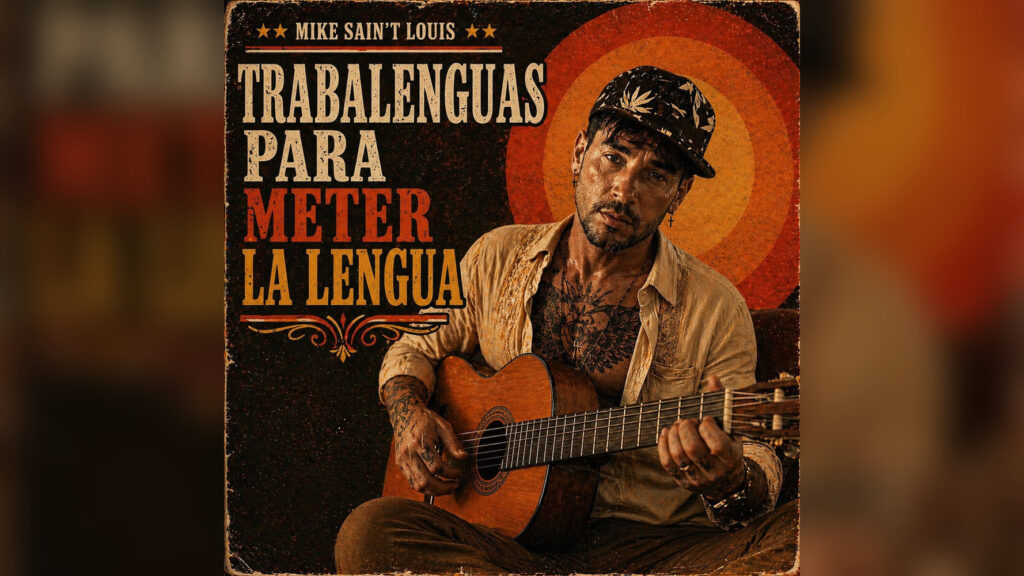
Paco León and Miguel Ángel de León share enough sounds to start a tongue twister. In Mike Sain’t Louis’s “Trabalenguas para meter la lengua”, that coincidence is more than sufficient material for an elaborate flirtation. The artist’s given name and the actor’s name are repeated, reversed and tangled together until the act of saying them becomes part of the joke. The song builds its fantasy from language before it builds anything resembling a romance.
The title announces two games at once. A trabalenguas challenges the tongue to keep pace with difficult syllables, while the rest of the phrase introduces an unmistakably cheeky second meaning. The lyric exploits that overlap rather than trying to conceal it. Names become invitations, invitations become imagined intimacy, and repetition keeps bringing the speaker back to the very word that makes the double entendre possible. The joke is meant to be heard as well as understood.
Sain’t Louis’s own essay, published on 19 October 2026, explains the playful origin in the shared surname and a screen crush. He treats the wedding and romantic possibilities as invention. That distinction matters because the lyric borrows the names of public figures while speaking with exaggerated confidence. There is no announcement of an actual relationship, an actual wedding or participation by Paco León. The song’s material is the narrator’s imagination and his enjoyment of where a coincidence might lead.
The official words bring María León into the pattern and add further variations around the surname. A simple verbal link begins to resemble a whole social occasion. The imagined wedding gives the speaker somewhere to send the names he cannot stop repeating. Each addition raises the stakes of a fantasy that began with a trivial resemblance. It is a comic escalation familiar from a conversation in which one person has already planned far more than the other person has ever heard about.
The narrator also tries to manage how he sounds. His defensive denials become part of the performance, because they arrive inside a song that has spent so much time elaborating the crush. The audience can hear the distance between his attempt at reassurance and the enthusiasm of the lyric around it. This is a staged comic voice, rather than evidence of real conduct outside the song. Keeping that distinction allows the awkwardness to remain funny without inventing an allegation about the artist or anybody named.
Sound provides the song with its structure. Reversing a name changes its rhythm while leaving the listener close to the same handful of syllables. Bringing in another León renews the pattern without abandoning it. The repeated references to the tongue then connect delivery and desire. A singer trying to negotiate the words is physically participating in the song’s premise. Its verbal difficulty is therefore part of the entertainment, rather than an obstacle that needs to be edited out.
The accompanying essay invites an equally playful way of hearing it, as something that can be repeated aloud and enjoyed for its diction. That author commentary offers a clear alternative to reading the lyric as celebrity news. The pleasure lies in how far a writer can push an accidental resemblance, and in how openly the narrator lets the joke run away with him. A familiar name supplies the first spark. The speaker’s inability to leave it alone supplies the rest.
“Trabalenguas para meter la lengua” is available with the complete Spanish lyric and official video on mikesaintlouis.com, alongside the artist’s explanation of the writing. Its companion GAYFOLK single page provides an audio preview and a free download. The piece belongs to the strand of the project that uses popular culture for intimate, deliberately excessive comedy. Here the scale stays close to the mouth. A surname, a crush and a phrase that is difficult to say become enough to stage an entire imaginary invitation.
Trabalenguas para meter la lengua — video and lyrics on mikesaintlouis.com Trabalenguas para meter la lengua — preview and free download on gayfolkplanet.com Trabalenguas para meter la lengua — individual single on Spotify Mike Sain’t Louis — pinned YouTube statement on the song Mike Sain’t Louis — song essay, 19 October 2026 mikesaintlouis.com gayfolkplanet.com
Mike Sain’t Louis on LinkedIn · Official YouTube channel · All official profiles